Listen or watch on YouTube
In This Episode
Hosts: Bob Frady & John Siegman
Guest: Martin Burlingame
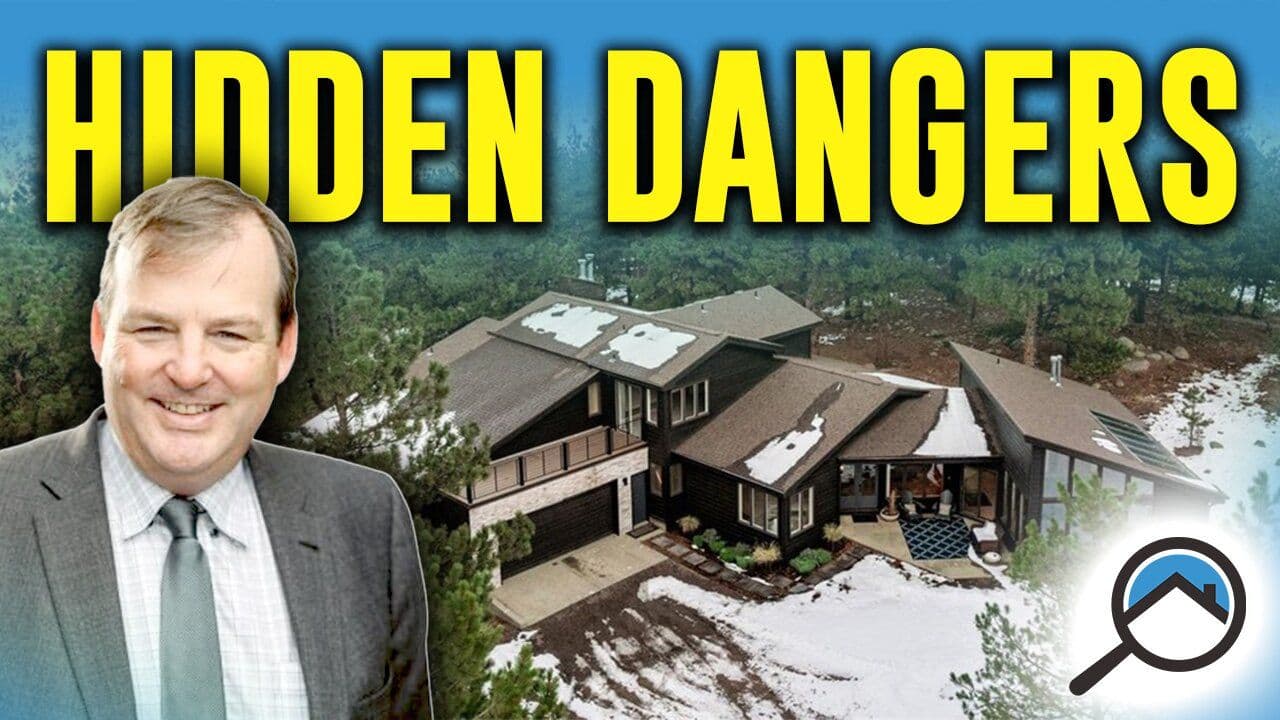
Property: 37 Wagner Cir, Boulder, CO 80304
Topics: boulderrealestate hiddenhomedangers propertylens insurancenightmare buyerbeware coloradoliving
Episode Summary
Dreaming of owning a home nestled in the foothills of Boulder, Colorado? Before you pack your bags, tune in to this episode of The Property Report! Bob and John sit down with Martin Burlingame, an insurance expert from One80 Intermediaries, to explore the hidden risks that could turn your dream home into a financial nightmare. They dissect a real property in Boulder currently on the market, revealing a history of hail and wind damage, high wildfire risk, and potential radon exposure. Discover the importance of understanding these factors before you make an offer, and learn how PropertyLens can help you ask the right questions and make informed decisions. This episode is a must-listen for anyone considering buying a home in Colorado, or any area with unique environmental and insurance challenges.
Key Takeaways
✅ Boulder, Colorado presents specific insurance challenges due to wildfire risk, hailstorms, and radon exposure.
✅ It's crucial to verify insurability and understand potential costs before purchasing a property, especially in high-risk areas.
✅ Homebuyers should be aware of potential issues related to aging infrastructure, including sewer lines, electrical systems, and well water quality.
Resources
🔹 Zillow
🔹 Try it: Propertylens.com
🔹 Questions? Contact us: support@propertylens.com
Transcript
[00:00:00] Bob Frady: Ladies and gentlemen, boys and girls, welcome to another episode of PropertyLens, Property of the Week. As you may or may not know, I am Bob Frady. Co-Founder and CEO of PropertyLens with me.
[00:00:20] John Siegman: John Siegman, Co-Founder and President of PropertyLens.
[00:00:23] Bob Frady: And today, we have a guest. Our guest today is Martin Burlingame from One80 Intermediaries.
[00:00:30] Martin, why don't you tell us a little bit about yourself and what you do.
[00:00:32] Martin Burlingame: I will, Bob. I will. So, I run the national binding practice for One80 Intermediaries. So we have five offices in North America and we are 50% focused on personal lines across the U.S. with a heavy emphasis west of the Mississippi.
[00:00:51] And so we do, we have six or seven different programs that handle all kinds of regular homes, high value homes, tiny homes, builders' risks, flood, quake, and so on.
[00:01:03] Bob Frady: So it sounds like when you can't get insurance, you should talk to one of the intermediaries.
[00:01:08] Martin Burlingame: Well, the elevator pitch is we help insurance agents insure the uninsurable.
[00:01:13] Bob Frady: There you go. Okay. Speaking of insurance, we're not necessarily looking at this from an insurance standpoint, but what we normally do is we pick a property, we run a PropertyLens report on it, and then we play demo roulette and say, what do we see in this property?
[00:01:29] Martin Burlingame: I'm ready.
[00:01:31] Bob Frady: And today we are going to look in your neck of the woods.
[00:01:34] Martin Burlingame: I haven't had time to review this report.
[00:01:37] Bob Frady: No.
[00:01:37] Martin Burlingame: I haven't looked at it and you're holding my feet to the fire.
[00:01:40] Bob Frady: It is, it is blind, blind, blind, let me get just a slight difference.
[00:01:43] Martin Burlingame: Blind roulette. I'm ready for this. Okay. I haven't seen it either.
[00:01:48] Bob Frady: Here we are. We're going to look at this property in Boulder, Colorado.
[00:01:53] So we've got this report in the background. It's a four bedroom, four bath. It is for sale currently. In Boulder. Okay. So I'm going to look at the report.
[00:02:03] Martin Burlingame: So before you open the report, from an insurance perspective, Boulder has a high concentration of student housing because of the university there. It has, on the outskirts, some heavy brush.
[00:02:14] It has higher property values across the mean of the state, and it has some older construction in there as well.
[00:02:21] smorgasbord
[00:02:23] Bob Frady: (Inaudible) of stuff. So basically what we do in proper lands is when you enter an address, we send out a whole bunch of requests for data, some of which we build, some of which we get from other companies.
[00:02:38] We bring it all together, we compile it, we make sense of it, we run it through a series of rules and some AI to try to figure out what it is that we see at this property. Because the goal is that you have this before you make an offer on a house. So you ask the right questions. And the first thing that we see is that this property has had some damage in the past. It's been affected by damage in the past.
[00:03:03] Now, let's see if we can figure out why. Now, when we first built PropertyLens, all we did was show the data. And people said, you've got to break that down for me and put it into a format that I can understand. So we're doing a lot of work to try to give people questions that they should ask while they're talking to the seller's agent to say, answer these questions for me.
[00:03:27] So the first thing that we see, and that's what we call our BuyerLens. So the first thing that we see is that there have been 47 damaging events affecting this property between 2011 and 2023, which is a lot.
[00:03:40] Martin Burlingame: That's a pretty common thing in Colorado.
[00:03:43] Bob Frady: Okay. for, for those of us in SoCal, we're like, Whoa, that's a lot.
[00:03:48] 42 wind events, five hail events. It does have hail risk here. We see five events between July of 2011 and July 28th of 2023 with a diameter between one and a quarter inches and 42 wind events. So a lot of wind events up to 95 miles an hour through January of 2025. So the first thing that we would tell the seller, excuse me, tell the prospective buyers.
[00:04:15] Does it look like there's any damage from these wind events? Has there been any damage in the past? Has it been fully repaired? Are there signs of shingles that are missing? You know, when you look up at the roof, can you see anything that looks weird? Do you see cracked stuff? Do you see stuff strewn about the yard?
[00:04:29] So, the first thing we would tell people to take a look at is what does the property physically look like beyond the pretty pictures that you see in the MLS?
[00:04:40] John Siegman: Well, the roof of the property, we do a lot of work on the roofs to tell you if it's in good shape, bad shape, and needs repair. and so this roof appears to be in good condition.
[00:04:50] Our great condition as it says, that's made it at 13 years old, nine years left. There's some things that you'd want to, definitely, take a look at here. Given the number of events, did they put on fortified shingles? What's the warranty look like? Did it have a warranty? things, you know, along those lines and when the last time it was really replaced.
[00:05:12] So, you know, they must be maintaining it for it to be in that good of shape given the events.
[00:05:17] Martin Burlingame: And looking at this, I mean, knowing that there've been 42 wind events and Five hail events in the past X amount of years. And the roof is 13 years old. From my perspective, I would be already wondering why hasn't there been a new roof put on this place?
[00:05:36] And I'd certainly want an inspection of the roof if I were buying this house.
[00:05:40] Bob Frady: So the next thing that we've got is radon exposure radon naturally occurring radon. It comes from the decomposition of the ground. goes up through the ground and is hazardous to humans. It's the second leading cause of cancer for people in the U.S. This has a high risk of an ice dam. I mean, it's Colorado.
[00:05:59] You get the winter. It also has frozen pike risk. It's got, high risk of damaging hail. It's in a high risk area for wildfires, and there's no hydrants within a thousand feet of this property. So, the first thing we'd ask is, have you had a radon test done? That is not a normal test in home inspections. So, that's question number one.
[00:06:24] Question number two is, have you had any ice dams? You know, I bought a property as John well knows in Minnesota and I asked them, did you have any ice dams? They're like, yeah, that's why the roof was replaced. So, ask that question.
[00:06:36] The other thing you want to ask about besides insulation is are there gutter guards on the roof because that can help prevent some of those things from happening. So lots and lots of questions around the damage, but the number one thing here is there aren't any hydrants close by.
[00:06:51] Martin Burlingame: Yes. And so you're gonna I mean, there's multiple exposures here.
[00:06:55] The first is radon. Colorado is known to be a radon prone area, but not the entire state. So what this is telling me, this is a radon area. If you were doing one near me in Colorado Springs, we'd have high radon, but up the road, maybe 20 miles, there's no radon exposure as well. And that requires, as you mentioned, a special inspection.
[00:07:16] And if the house isn't equipped to disturb, burst the radon, it needs to be part of the purchase. So, and most homes that are in high radon will have it, unless it's been a single owner who hasn't sold it, and he may not have a radon mitigation system. And they're not cheap to put in, depending on how the house is constructed.
[00:07:36] Yeah. I mean, that's a big thing. I mean, it's a big cause of cancer.
[00:07:42] Bob Frady: The other thing that we see in this location is that it's old, you know, the property is 41 years old and a lot of times you get to check the sewer line. So one of the things I would do if I were buying this house is have a, have a sewer line check done if there hasn't been one done recently to make sure there's no root intrusion, that's going to cause a problem in the future. and then. Things like the furnace, water heater, et cetera, et cetera.
[00:08:10] Martin Burlingame: Well, I mean, the roots are a huge thing, because people kind of think that their homeowner's insurance is going to cover from the house to the street, and it does not do that. Your homeowner's insurance covers sudden accidental breaks. that are going to occur in the house and you can purchase sewer backup coverage.
[00:08:28] Those are coverages and most people understand, but the city is only responsible up to where they start delivering water to your house or sewer to your house. And there's a gap between your house, the foundation of your house.
[00:08:42] And the city usually, and quite often if the break occurs there, because you end up having on an older house like this, you might have old pipes, you might have clay, you might have iron, you might just have, construction was done and jostling and breaking, and the pipe will break between the house and the street, and you're responsible for fixing that.
[00:09:03] Some insurance companies offer an endorsement, but those have been highly unprofitable for insurance companies. And many people aren't offering those anymore. So if you have an older house and there's a sewer issue or water, and it's saying that take a look at it, you may want to talk to your insurance agent about fixing that or offering a coverage to handle it.
[00:09:25] Bob Frady: Yeah. I sold a house one time and somebody actually said, your house is old. I want to take a look down the sewer pipe, much to my consternation. And they ran the line down there and there it was, there was a wreck that had, that had gone through the terracotta pipes, which we have in South California, and I had to give a big credit, you know, on the sale cause I didn't want to dig it up and fix it.
[00:09:48] And then they came in and they had a service that came in and just. Plowed a replacement right through the entire line, which was kind of cool. Yeah. So, these are the questions that we want buyers to ask. Listen, you may fall in love with this house, you may love the view, you may just love it, but this gives you an idea of, okay, these are some of the issues I'm going to have to face at some point. At least I go in aware before I put my money down on a place.
[00:10:14] Martin Burlingame: Absolutely.
[00:10:15] Bob Frady: So next we come with our InspectorLens. This is for people who've already bought a house and they say, Okay, now what do I do? The goal here is to give this to the inspector to say make sure you check these things because inspectors, number one, don't catch everything, and number two, are paid by the seller.
[00:10:35] You want to make sure they're answering your questions as well as the seller's questions. Okay, so the BuyerLens is for people who are thinking about buying a house, what happens if you've already made the offer? How do you use PropertyLens to help you uncover issues that might not be available, might not be visible?
[00:10:54] That's where the InspectorLens comes in. So, just like in the BuyerLens, we see there's a lot of wind events here, and we tell the inspector, check your appliances and outbuildings for damage, check for, check your gutters, make sure the gutters are moving away from the property. It looks like the roof is in good condition, but it does have some age on it, so you want to inspect the roof for some signs of shingle damage, for gutter damage, your downspouts, et cetera.
[00:11:21] John Siegman: Well, you're looking again, we talked about radon. So we definitely want to make sure that there's a mitigation system, that system is working if there's not one to definitely get one installed and then you know it's an older property and older properties and older property problems.
[00:11:38] Bob Frady: One of the things about radon as well is you do have to make sure the system is serviced every couple of years.
[00:11:44] So ask them when was the last time it was serviced. There should be a note hanging on the system, but if there's not, ask when the last time it was serviced.
[00:11:51] Martin Burlingame: Well, now you just brought that up. I, there's no note on my radon system and it's probably been 10 years since I had it inspected. So I probably have to do that.
[00:12:00] Yeah. Now granted, this isn't my property, but I'll, I'll, I'll do this on a PropertyLens. A report and get my radon thing inspected because we have two radon units in our house.
[00:12:11] Bob Frady: Every three years, they're supposed to be inspected to make sure that they're still pulling it out. And then finally, we have our insurance lens, which are issues that may cause you some problems in getting insured.
[00:12:24] And in this case, we don't highlight it enough, but we should. There are two things that are. Problematic here. The first is brush exposure, a high risk area for wildfires, especially everything that's going on in California right now, people are super paranoid about wildfire exposure. And the second is that there's no fire hydrants within a thousand feet of the property, which means that if there was a fire, you have to rely on the truck that comes.
[00:12:51] To get you, to get you, coverage.
[00:12:54] Martin Burlingame: And most likely this house is going to get if it's insured with an admitted carrier or standard carrier, it's going to get non renewed. At some point there's been a huge push in Colorado of non renewals going out. And most excess and surplus specialty carriers are not going to insure it either.
[00:13:13] Because the, I would bet without looking at it, just the fact there's no hydrant and high brush, that it is a very high brush fire area. So most likely this would have to go into the Colorado Fair plan, which goes live in three or four months. Well, I mean, your other issues hail, right? I mean, it's, I mean, there've been five events in 10 years.
[00:13:33] So not only is it in a high brush area, it's in a high hail area, which is really going to make it complicated and probably go into the fair plan or into a similar item.
[00:13:43] Bob Frady: So in Colorado with the fair plan, is it just for brush coverage? Is it for hail coverage as well?
[00:13:49] Martin Burlingame: So, and it's not live, legislation was passed in 2022.
[00:13:54] There was a fair plan, set up. I was on the board for the last year, it's a one year term for insurance agents and I just came off. But they're planning on going live in April, May timeframe. Kelly Campbell's the, the director in charge of the fair plan. And Brian Bernier from PIAC is the president of that organization of the, you know, the board right now.
[00:14:20] And it's a DP one, so dwelling policy one. form. So it's going to cover the seven basic perils, which include hail and fire.
[00:14:28] Bob Frady: One thing here is the replacement cost on this property is $892,000. So you want to make sure that the size of your Schedule A is appropriate to cover your house. One of the things that will rear its head again is under insurance, where the cost of reconstruction has gone up so much in the last couple of years that people's schedules haven't kept up.
[00:14:51] Martin Burlingame: That's a huge issue, and we're seeing it everywhere. Colorado's in the middle of the pack on what they're doing. There's other states that are much worse. but if you don't have it insured correctly, it's a real problem, when the claim happens. Because, I mean, if you have a mortgage on your house, and you're underinsuring it, you're in serious issues with the mortgage company if there's a total loss.
[00:15:15] Bob Frady: Those are our sort of question Q& A part of the report. You know, things that you should discuss with the selling agent, things that you should discuss with the inspector, and things that you should discuss with your insurance agent. And then we get into the data itself. So we could, and this is all the real estate data that you're used to seeing, like what year was it built? It's 41 years old, square footage, the status, it's coming soon. It's not for sale yet, but it will be for sale shortly.
[00:15:40] Martin Burlingame: Well, in this particular one, Bob, I mean, I would make sure that you talk to an insurance agent to see if you can get insurance. Exactly. We're seeing that more and more right now impacting transactional sales and higher brush areas where they're unable to get either insurance or affordable insurance.
[00:15:58] Bob Frady: It is, it is a huge issue in any state with peril exposure, you know, even someplace like Minnesota, you know, my premiums have gone up 50 percent in two years, because of hail exposure, with minimal breast exposure. So, all the things that you're used to seeing, you're more than a hundred miles from the coast, of course, because it's, Colorado, you've got a couple of fireplaces in there, And if there's no solar, you've got well water, that's another thing that we don't highlight enough that we probably should highlight a bit more is you might want to get that water tested before you, move into the house because well water does, you know, there's a 50 percent higher incidence of bladder cancer for people who are on well water than people who aren't.
[00:16:41] Martin Burlingame: Well, on top of that, you probably need to see not only the quality of the water, but the quality of the well, because Colorado is a granite state. And if that well goes dry, how much deeper are you going to have to dig to find additional water? and that's a very expensive situation if it's not pumping enough.
[00:17:02] Bob Frady: Is there a test for that, that people normally run?
[00:17:05] Martin Burlingame: I mean, in this kind of thing, if I were buying the house and it's on well water, I would probably get a Licensed contractor who digs wells to come out and look at it. There's pressure testing on a well. I mean, that's, I mean, it'll tell you how many cubic feet come out per minute and stuff like, or cubic inches per minute.
[00:17:25] so, but again, you know, if you're planning on growing grass and having a large lawn, now this is a larger house on a lot of acreage, it's probably living in a more rugged environment with natural growth, but again, if you're trying to grow grass and you're on a well, you better have a lot of water coming out of the well.
[00:17:41] Bob Frady: This is, and then all the information about, the location in the suburbs of Boulder County and you're in the Boulder Valley School District, and in case you want to grow things, you're a USA Plant Hearted Zone 6.
[00:17:54] Martin Burlingame: It's actually important for the tomatoes. Got to know that kind of stuff. How many really matters because people, it's amazing what grows that hardiness six means they grow zucchinis and squash very well.
[00:18:10] Bob Frady: So this is the MLS list, the MLS data, along with some previous information about, What the assessed value is, what the land value is. So it looks like it's been a while since this property has been on the market. and the estimated market value based upon some AVMs that we have. Now, one of the things that's interesting and one of the things that we do is we mine this data for things that might be impactful.
[00:18:36] Like a lot of times, if you get a new roof, it's just not, it's not. Displayed anywhere, or if you get a new heater, it's not displayed. So what we do is try to comb through there to see if there's ways we can anticipate the ages of things that might not otherwise be disclosed. Now, what's interesting about this house is it's been for sale several times and the price has sort of gone all over the place.
[00:18:56] Where it hasn't sold, but it has been listed several times. The last time it was sold was in 2014. but it doesn't give a specific sales price, which is interesting.
[00:19:08] John Siegman: well, it was listed for $640,000 back in 2014,
[00:19:12] Bob Frady: 2014. So when people tell you what's the value of real estate, you look at, well, that's pretty good growth over time.
[00:19:18] Martin Burlingame: Yeah. But the problem you're going to run on this one, right? The rebuild cost is $892,000, you've got an acre of land in Boulder, that land is worth money. But if there's a brush fire that takes out the entire thing, is it still worth the million four difference between the rebuild costs in the house?
[00:19:35] If it's all charred and you've lost all the trees and it's going to be hard to get insurance for more than $895,000 because that's all they're going to pay if there's a claim.
[00:19:44] Bob Frady: Yep. Exactly. The other thing is, is taxes gone up, have gone up here, over the last couple of years. and one of the things that, you know, that your mortgage payment may stay constant, but your taxes and your insurance are, can go up forever.
[00:19:59] So you want to make sure that you have a good idea of what those monthly costs are. Now we get all the pictures. It's a beautiful home. Gosh.
[00:20:06] Martin Burlingame: Absolutely. Well, that area is absolutely, I mean, it's stunning up there and I bet the views off of that house are. Incredible with, I mean, I mean, you're pulling all the MLS pictures.
[00:20:17] Is that what's coming in? That's great. I mean, look, we'll look at that. I mean, that's right up there. They just listed it. Look at that deck with, you're really, really in the ruse, that bottom left picture. It's pretty impressive.
[00:20:27] Bob Frady: Yeah, it's, it's a beautiful location. And again, you may fall in love with it.
[00:20:31] And buy it regardless, but at least you know what you're getting yourself into. So then we start to look at the roof. The last picture that we have of the roof is in July of 2024. We estimate that the lifespan in Colorado for a shingle roof is 22 years. And that this roof is 13 years old. It has nine years of remaining life.
[00:20:52] It's shingle construction and the cost to replace the shingle roof would probably be about 20 of this size would probably be about $25,000.
[00:21:00] Martin Burlingame: And understand a lot of companies are now putting actual cash value on the roof after a certain amount of years, usually 10. So a 13 year old roof in Colorado is going to have a depreciated schedule, which will take the lower amount in there.
[00:21:14] So you could be in. You know, if there's a major hail event, $25,000 is probably low because obviously there's going to be material gouging and a shortage of resources, but then you could get less than that.
[00:21:27] Bob Frady: Yep. So do they have a specific deduction for hail in Colorado?
[00:21:32] Martin Burlingame: It depends on the insurance company.
[00:21:33] So a lot of companies are now going to, to a percentage deductible. Some of them have just announced they're going to 2%. So in this particular case, you'd have a $17,000 deductible for hail, but with a hail event, it's going to be much bigger than $25,000 because you're going to get hail on all the siding around the house.
[00:21:53] Yeah. So it's pretty significant, the wind would be the roof and, you would have to replace it.
[00:21:59] Bob Frady: Yeah, this, this is normal pricing. This is not surge pricing.
[00:22:02] Martin Burlingame: Oh, of course. Yeah. I mean, none of us expect that. I mean, you're in Cal. I mean, you guys are in California. Surge pricing is going on there right now.
[00:22:09] Bob Frady: Oh yeah. It looks like the roof's in great condition. It's got a very high score, no visible signs of defects. It looks relatively good for being an older roof, but it does have high exposure, between the risk of ice dams, all the events that we've seen. And the roof is more than halfway through its lifespan.
[00:22:26] So there is some risk associated with this roof.
[00:22:29] Martin Burlingame: Well, the other one is the tree overhang percentage you're putting there. In the brush states, that's incredibly important, right? Because what could happen is your insurance company could inspect and require you to cut a bunch of trees. And in this case, what I like about the aerial is it's not picking up the shadow that's across the roof.
[00:22:45] It's actually picking up the tree that's causing the, or the trees that are causing the shadow. Which is a really good thing, because otherwise you'd be at 50 percent overhang, which is not accurate. Not good.
[00:22:56] Bob Frady: Then we have, damaging events. Here's all the hail events. Yeah. It, in this, in this scroll sideways.
[00:23:03] So, there's a lot of them that are in here. the last one.
[00:23:07] Martin Burlingame: Let's go all the way to the end there. Let's see what's happened.
[00:23:09] Bob Frady: Let's see. 2025, January 11th, there was a high wind event. And we view high wind events as 65 miles an hour or greater.
[00:23:18] John Siegman: And that's just two days ago.
[00:23:21] Martin Burlingame: Yeah, we just had big winds come in.
[00:23:25] Yeah, but again, the 65 mile an hour should be okay on a, but again, this is an older roof. What did we say? You said the roof, the last picture was July of last year, right? So there's been no hail events since last year.
[00:23:40] Bob Frady: correct.
[00:23:41] Martin Burlingame: But if you go back, when was the, when was the last hail event? Twenty, 2023.
