Listen or watch on YouTube
In This Episode
Hosts: Bob Frady & John Siegman
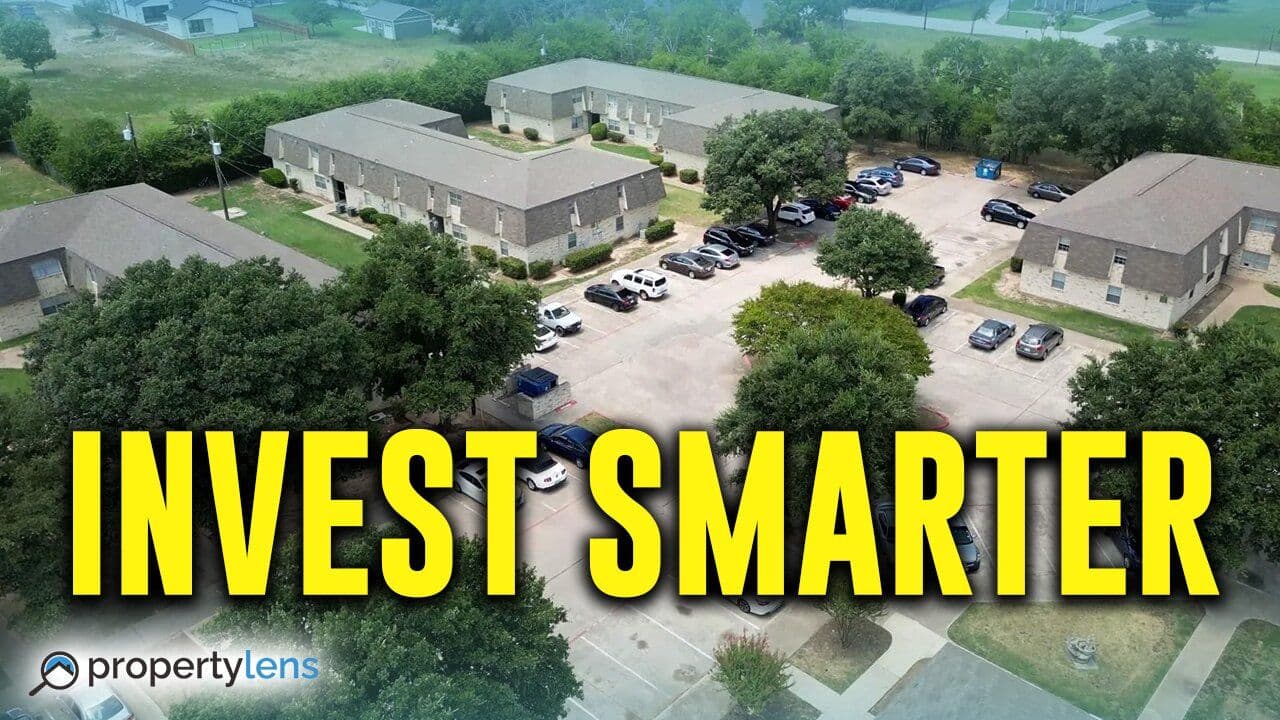
Properties: 255 Turner Ave., Roanoke, TX 76262
Episode Summary
Welcome back to PropertyLens! 🎙️ In this episode, Bob Frady and John Siegman welcome Alan Danielson, founder of Quantum Funding, to walk through a real report on a multi-unit property in Roanoke, Texas. From hail-battered roofs to PFAS water risk, this episode covers what smart investors must ask before making a deal.
Key Takeaways
📊 In this episode:
✅ Why Texas investors need to ask about roof age, hail damage, and cash-value policies
✅ What PFAS and soil runoff mean for tenant health and building integrity
✅ How PropertyLens reveals permit gaps, environmental threats, and real risks for landlords
💡 Whether you’re a first-time investor or scaling up your portfolio, this episode delivers the questions and insights you need to protect your capital and your tenants.
🔍 What do we see
✔️ PropertyLens walkthrough on a real 255 Turner Ave apartment unit in Roanoke, TX
✔️ Repair estimate: up to $217K in expected costs of major systems haven’t been updated
✔️ High-risk hail zone with recent storms and unclear roof permit history
✔️ PFAS water concerns and elevated crime risk, with suggestions for safer infrastructure
✔️ Alan’s tips for being a better landlord through due diligence, data, and tenant care
Resources
🔹 Try it: Propertylens.com
🔹 Questions Contact us: support@propertylens.com
Transcript
[00:00:00] Bob Frady:
Ladies and gentlemen. Boys and Girls Ships at sea. It is time for yet another episode of Property of the Week with PropertyLens. As always. For those of you who don't know, I am Bob Frady, Co-founder and CEO of PropertyLens with me as always,
[00:00:24] John Siegman:
John Siegman, President and Co-founder of PropertyLens.
[00:00:28] Bob Frady:
For those of you who are on the You face down there, click the subscribe button.
[00:00:32]
It makes us feel better when you do that. It really, 'cause that's all we're in this for, is feeling better about ourselves. We have a very special guest today, Mr. Alan Danielson, who is the founder of the Quantum Funding Company joining us from just outside of Fort Worth, Texas. Alan, give us a little overview.
[00:00:50]
Tell us a little bit about yourself.
[00:00:52] Alan Danielson:
Yeah. I, grew up in this, Southwest part of the country. And my mom was from Fort Worth, so I kind of grew up here, but I've lived in other places, traveled all over the United States, and now I'm back. And, since coming back started my new company here, the Quantum Funding Company.
[00:01:09]
And our mission as a company is to reduce the barriers to financial barriers specifically to real estate investing success. And so what I do is I work specifically with real estate investors on funding their deals, because the first and biggest obstacle to real estate investing is where do I find the money?
[00:01:30]
The second one is, how do I succeed at REI without having to spend a ton of money on training. And so my company does something a little bit unusual. I've been advised against this by, quite a few people, but either I'm dumb or I just, I'm stubborn. I don't know. I'd like to think I'm generous.
[00:01:55]
at the end of the day though, we offer free consulting, for our REI clients. Now there is a catch. They have to sign up, sign a contract to be a client and to say that, after you've consulted us and trained us and help us to get ready for getting a loan and get ready for finding off market properties and all of the ins and outs of success in REI.
[00:02:19]
Then yes, we're gonna use you to get loans. And, it's not an exclusive contract forever. There is a time limit on it, but, we've gotta make a living. And so we don't want to just invest time in people who are simply wanting to learn something for free. And run away. So that's how we're wired, a little bit different.
[00:02:42]
I also don't do a ton of traditional marketing. Instead, I hire real estate agents who specifically focus on real estate investing clients and then pay them a generous commission for bringing their clients to me to get loans. So I get experienced clients through my realtors and then I call them quantum REI specialists.
[00:03:08]
And then I get my newer clients from people who are interested in learning the business. So that's a little bit about us.
[00:03:16] Bob Frady:
So are you nationwide? Do you operate just in Texas? Where's your footprint?
[00:03:20] Alan Danielson:
We operate in 45 states, 37 of them really easily. There's no licensing or anything like that. and then, there's a map on my website quantumfunding.co.
[00:03:32]
You can look on there and see which state that you're in and if it's one that we can easily work with.
[00:03:39] Bob Frady:
So you did say dumb and stubborn. John and I have made a career of both of those things. So you're among friends on this part particular podcast. So normally what we do is we take a piece of property, we run a PropertyLens report, and then we walk through it to say, what can the PropertyLens tell me?
[00:03:59]
About a specific property.
[00:04:00] Alan Danielson:
Okay.
[00:04:01] Bob Frady:
Normally, you come to the site, you type it in, but what we've done is we've run it beforehand.
[00:04:05] Alan Danielson:
Yeah.
[00:04:06] Bob Frady:
It's, 255 Turner Avenue in Roanoke, Texas, and looks like it's a commercial property or a multi-family property apartment building because it doesn't have specific characteristics about this unit.
[00:04:20]
Here's what happens is when you type in an address to PropertyLens, first of all, we show you a picture to make sure it's the right place. Then you buy the report and we send out. All of our workers, our digital workers, to go gather data, bring it all back together. We run it through a bunch of rules. We run it through a bunch of AI and we present it in the PropertyLens report to give you some idea of what to look for at this property before you even walk in the door.
[00:04:48] Alan Danielson:
Gotcha.
[00:04:49] Bob Frady:
So the first thing we do is we give you our PropertyLens insights and the BuyerLens. In this case, the first thing that we do is give you an idea of what you might be spending in the next couple of years on repairs for this location. And the reason why we did that is because the number one reason why people are unhappy with their real estate transactions is unexpected expenses in the first couple of years of ownership.
[00:05:17]
So we try to cover that base and the people who publish that, the National Association of Realtors. Okay. So even realtors know that's a real problem for folks. So what we have a take a look at here is we don't know a lot about the underlying systems, right? Whether it's because permits aren't required or because it's not described in the listing, these are things, everything in this location is a flag.
[00:05:47]
'Cause there's not a lot of information about this particular location. So your pipes, your plumbing fixtures, your sewer liner, all things that you're probably gonna end up spending money on. 'cause there's no report of improvements on those in this location. I see. You add it all up, it's between $44,000 and $217,000 in repairs.
[00:06:08]
So it's not necessarily an inexpensive repair. Now, if you're lucky, it's lower than this number, right? If you're not so lucky, it's closer to this number. And that gets people into a lot of problems. John, what do we see in the BuyerLens?
[00:06:23] John Siegman:
Oh, what we see in the BuyerLens is all of the other things that you need to be aware of.
[00:06:28]
So yeah, this property gets pelted. There's just no way around it. It's Texas. They have hail, so hail events, wind events, both of which can be non-events as far as the property is concerned, but a lot of times they turn into major repairs
[00:06:52] Bob Frady:
Now inside of each event or each element, we show you a series of questions to ask because listen, you might love a property.
[00:07:02]
You fall in love with a location a lot of times and you want to know, how do I protect myself? These are the questions that you should ask. Right? it looks like it's been damaged and ha before, does the seller know anything about that? What was the extent of the damage?
[00:07:17]
Has it been repaired? When's the last time the roof was replaced? All the questions that you should be able to walk in and ask comfortably because this is what the data tells you that this house is at risk for.
[00:07:27] Alan Danielson:
Yeah.
[00:07:29] Bob Frady:
And if you want to, you can hand these questions to your inspector begrudgingly sometimes, but say, make sure you check these things out.
[00:07:35]
Look for specific signs of hail damage that you might otherwise not see. I see. 'Cause it's like, you go to the refrigerator and you open it up and someone says, what are you looking for? And you're like, I don't know, but I know it when I see it. Yeah. We don't want that.
[00:07:53]
You wanna go looking for the celery or something or whatever the brisket? Yeah. In Texas. You want the brisket? So go get the brisket in the fridge.
[00:08:01] John Siegman:
Well, we talked about, well, you've got tornadoes. Those go along with hail. There's probably some lightning as well. convective storms, all of those things are associated with conductive storms.
[00:08:14]
and so there's some serious risk associated with all of that. Not a whole lot of surprise there. You look down very similar to the questions that were asked before. 'Cause they're all associated with, is it gonna be bad for this, the siding, or is it gonna be bad for the row?
[00:08:35] Bob Frady:
It's Texas. You get all sorts of fun weather in Texas.
[00:08:38] Alan Danielson:
Last night we had tornado warnings till about midnight and I saw a video today. I don't know if it was true, it was on social media, so until I see it on television, I'm not sure, if it's accurate or not, but they said that a, one touchdown in Dallas last night. I had not heard that, so I was surprised.
[00:08:58]
But I would also not be surprised if it were true.
[00:09:02] Bob Frady:
You know what Texas gets that most states don't get. What's that? Is cyclonic wildfire. Which is when you get wildfire and tornado having a baby. It's fire auto. It's circular tube of fire that destroys everything. It's awful.
[00:09:19]
And it's limited to Texas and maybe a little bit of Kansas, Oklahoma. But it's crazy stuff. So we also see some risk for toxic exposure, and now we're getting into the realm of things that an inspector never tells you.
[00:09:31] Alan Danielson:
Okay.
[00:09:32] Bob Frady:
Because this is not what an inspector does, They run the switches to make sure it works.
[00:09:36]
There's a lot of, PFAs contamination in this area. So you wanna make sure that you do a water check. Now municipalities are supposed to filter this stuff out, but you still wanna run a check for the water in this location to see if there's any contamination in that water and if there is, find a visibil filtration system on the application.
[00:10:01]
Got a little bit of risk of crime in this location, is their security system. The roof looks in pretty good condition, so it may not be as old as we think. 'Cause the condition is pretty good.
[00:10:14] Alan Danielson:
Okay.
[00:10:16] Bob Frady:
So now we look at insurance, and this is a tough one for this particular location because it we're looking for a single unit inside of the larger structure.
[00:10:25]
So the insurance should be relatively small cost, but the replacement cost would be for the entire structure and not just, 'cause you can't just rebuild one unit. You're looking at the whole structure.
[00:10:36] Alan Danielson:
This particular building or apartment complex is one that a client of mine is looking at. It's several smaller buildings.
[00:10:43]
My guess is that this is one of the probably four or eight unit, buildings. And then there's another one next to it, another one next to it, and so on and so forth. Would the best way to analyze this with my client be to extrapolate these numbers based on the square footage of the entire property, just the apartments or the square footage of all the land?
[00:11:12]
How would you suggest I go about that?
[00:11:14] John Siegman:
The first thing you'd wanna find out is. Are all of the buildings underneath the 255 Turner Avenue address.
[00:11:23] Alan Danielson:
Okay.
[00:11:24] John Siegman:
Because a lot of times each complex will have its own address.
[00:11:30] Alan Danielson:
I gotcha.
[00:11:31] John Siegman:
So you might have five buildings on the property and there are five different addresses.
[00:11:37] Alan Danielson:
Okay.
[00:11:37] John Siegman:
Because then in that case, you'd wanna run five reports because each report is going to be specific to that location. Now some things are gonna be consistent across the locations. Crime's not gonna change. Any flood, however, could change dramatically from one end of the complex to the other.
[00:11:59] Alan Danielson:
I see.
[00:11:59] John Siegman:
But something like a tornado, if one side of the complex is exposed, the other side is.
[00:12:06] Alan Danielson:
Right.
[00:12:07] John Siegman:
So, but each one of those, and then roof updates could be totally different for each building. So the roof condition could be different. The permits associated with the buildings could be different.
[00:12:21] Alan Danielson:
One of them might have burned down and been rebuilt. That kind of thing.
[00:12:25] John Siegman:
And so for each one of those instances, you'd wanna have an address specific report.
[00:12:33] Alan Danielson:
Okay. That's really good to know. That's helpful.
[00:12:36] Bob Frady:
The interesting thing that's going on in Texas is the changeover in roof replacements.
[00:12:44] Alan Danielson:
Okay.
[00:12:45] Bob Frady:
As of, I think the beginning of this year. A roof coverage switches from replacement cost to actual cash value after only seven years in Texas. So if the roof is more than seven years old. It declines over time in terms of how much you're gonna get back. In the event of damage. So you want to make sure you know exactly how old the roof is on this location.
[00:13:09]
I see. Because right now we're not getting great signals about exactly how old it is. Because if you look here at the damaging events, we go back to 2011 and there's three inch hail now, right? Three inch hail is pretty big. 90% probability that the roof was totaled in this. And if it wasn't, then it's probably damaged and you want to find out more about this roof because it'll be a possible expensive fix.
[00:13:37]
The last big event we had was 2023. Three and a quarter inch hail, and then 2024, 2 1/2 inches, lots and lots of hail at this location. This is more than most places get. So looking at all of this, there's a lot of wear and tear on that roof.
[00:13:54] Alan Danielson (2):
Yeah.
[00:13:55] Bob Frady:
Now we can go back in time and look at, different properties.
[00:13:59]
So we go back to 21. And we can see it looks like it's the same roof, so very soon the tree's bigger. But, Which has its own danger, with the overhang issue for sure. We estimate that it's 1-year-old. It's 25 years remaining in life. So 26 year span in Texas, but it's an expensive fix.
[00:14:22]
It's a $50,000 fix to rerun that roof. It's in really good condition. It's got medium risk of exposure, primarily from tornado and hail. It's got some tree overhang, which is, all things that you would look for. Soil types are fine. Lots and lots of data about the property itself.
[00:14:45]
And this is really for, I hate to call it the data nerds in the crowd, but some people really like to know everything they can find out about the property. This is the part of the property that's for them, to really say you, this is 50 pages, you're tired, you want to go in here, you wanna circle things, you wanna understand everything that you can about the property.
[00:15:07]
Now what do we see about potential threats and structural integrity, John?
[00:15:12] John Siegman:
Well, the, you've got some soil runoff, so key to make sure that the slopes are going away from the buildings. And since there are five buildings there, making sure that. Going away from one is not pulling it toward another because that would be bad.
[00:15:29]
Termites, it's the south. They happen. probably need to, poke some pieces of wood, make sure they're not there. And if they are tent, the buildings, water hardness, it's not hard. No mics of signs, no frosty potential. The soil was falling. All else is pretty good as far as structural things that are gonna affect the structures.
[00:15:56] Bob Frady:
Yeah, soil runoff impacts basements or foundations, As much as anything else. So you wanna make sure you take a look at the foundations for any obvious sides of damage.
[00:16:05] Alan Danielson:
Okay.
[00:16:07] Bob Frady:
We don't have report. We don't have permits. The first thing we tell you in Roanoke is, are they required? They're generally required.
[00:16:16]
Texas has lax building codes. And a lot of times, you might think that it's required, but it's generally not required. Okay. especially if it's like for like, but we also give you a link to the Roanoke Permit Department so you can see what permits are required.
[00:16:33] Alan Danielson:
I see.
[00:16:34] Bob Frady:
Without permits, it does limit your ability to really dive deep on what's been done.
[00:16:40] Alan Danielson:
Right. You miss out, a lot of good information.
[00:16:43] Bob Frady:
Yeah, exactly. Which is why we have so many unknowns at the top of the report, which to me is just ask these questions because there are no permits for this location.
[00:16:52] John Siegman:
Well, one of the interesting things in running this report is that we had to make up a number.
[00:17:00]
So it would actually run the report. Because you didn't want, so we know that there are permits associated with that location, but there are none associated with that unit. Which being an apartment totally makes sense. Where if this were a condo, it would be a little bit different, even if it was a condo with a unit number because there may be specific permits to that unit.
[00:17:25] Alan Danielson:
Okay.
[00:17:26] Bob Frady:
So, for flood. Not a big flood risk here. It's not in a hundred year zone, it's not in a 500 year zone. There's little risk of coastal flooding. Well, it's in Fort Worth, which is pretty far from the coast, and there aren't rivers nearby that could potentially flood the location. So flood insurance is not required, and we'd actually recommend flood insurance.
[00:17:48]
'Cause in commercial policies, flood is usually part of the policy, whereas in residential policies is it's excluded. Here's the map. There's nothing to show because there's nothing around here from a flood standpoint, I see the nearest zone is a half a mile away. If this was a flood zone, you can have a LOMR of a LOMA one is by the actual homeowner, one is by the builder.
[00:18:11]
Which says that this property has been raised up. And you'll see that a lot, with, especially commercial properties where they're near a floodplain, but they raise the property up a foot or two. And then they'll file a LOMA or LOMR to say, we've raised this up. And you'll see it on the map.
[00:18:27]
It will be an island where the house sits on. And that's something that you wanna alert the consumer to say, you may not. Need flood insurance for the property but you might have trouble getting to the property if the area floods because you get island, you get flood islands.
[00:18:45] Alan Danielson:
Right?
[00:18:48] Bob Frady:
So John, what kind of risks do we got here in Texas?
[00:18:50] John Siegman:
Well, we've talked about it. Hail, tornado, wildfire. Texas has wildfire. We even mentioned the fire NATOs. There's like lots of stuff in Texas that you can come up against.
[00:19:02] Alan Danielson:
Ice storms. Yeah. And all kinds of crazy stuff here..
[00:19:05] Bob Frady:
You got some winter weather here and some cold. You got the cold wave, you got the heat wave.
[00:19:11]
You get the double play on that one. Cold wave. The heat wave. ice storms. Texas had a very famous ice storm a couple of years ago where the grid fell over. We don't anticipate grids falling over. But now they've made that redundant, so hopefully it doesn't happen again. Not a lot of risk of sinkholes.
[00:19:28]
Some parts of Texas have very high risk of sinkholes. Okay. you can tell when you try to dig a Swimming Pool and you have to go through limestone. Oh, okay. That's the kind of stuff that ends up forming a sinkhole is I see limestone formations wear away over time. Not a lot of avalanche. It was pretty flat in this area and not a lot of volcano.
[00:19:47]
They're volcano, which is good. There's an elevated risk of crime in this area. Different types, assaults and burglaries as opposed to motor vehicles and robberies. There are no sex offenders within half a mile of this building, which is lovely.
[00:20:06] John Siegman:
That are registered.
[00:20:07] Alan Danielson:
That's really good news.
[00:20:09] Bob Frady:
Yeah.
[00:20:09]
There may be sex offenders everywhere, but the ones that have been registered by the state are not correct. Belong to any in this location. This neighborhood isn't very resilient to natural disasters, which means if something's happening, If there's a hurricane warning or something like that, that comes into town, then you best prepare yourself that town's not gonna be able to help you out too much.
[00:20:31]
Okay. They're not really geared for, they don't, They'll try their best, but you're not necessarily geared for it. But you do have very low noise, which is nice. So it's probably nice and quiet. Here's the points of interest. EV charging stations, childcare centers, public schools, airports.
[00:20:51]
There's a lot of smaller airports around here. Stage goes hill there, arrow Valley and Hillcrest are all within four miles. Toxic disclosure, here's where we see issues with, PFAs and with mold. So you want to, you wanna look for obvious signs of mold, like is there discolored walls are there waves in the walls that look like water may be tracked in there.
[00:21:21]
Okay. And of course, are there in the bathrooms, mold lining the bathtub.
[00:21:30]
Let's see. We've got an underground storage tank a quarter mile away with the Texas Metro Mart. The leaching fields can go out to about a thousand feet on those things. If they're leaking. There's not a ton you can do about it, but sometimes you want to know that it's there.
[00:21:46] Alan Danielson:
Okay.
[00:21:48] Bob Frady:
There's a Superfund site, about three and a half miles away, which again, pretty far.
[00:21:54] Alan Danielson:
Right.
[00:21:56] Bob Frady:
And then we'll give you the closest sight to that. We'll tell you that the fire protection and response is pretty good here. You've got a fire hydrant within 250 feet, which is important for insurance, and you've got a number of them within a thousand feet. You've got three stations within five miles where Roanoke is one trophy club fire is the second.
[00:22:16]
And medical response is often tied to fire station response. And then you've got law enforcement response, which is, here's where the fire stations and hospitals and police stations are located. So you got pretty good coverage in this area.
[00:22:31] Alan Danielson:
Yeah.
[00:22:32] Bob Frady:
Which keeps, it's good 'cause it keeps them busy, expected electrical costs based upon the square footage.
[00:22:40]
Encore is your provider in this area. It'd be about $1200 bucks a year. Okay. If you want solar, it's gonna take a while to pay back. So you may or may not want to get solar for this location. With incentives, it's about eight years. If your hold time on the property is five years, you might say, eh, it's not worth it.
[00:22:59] Alan Danielson:
Okay.
[00:23:02] Bob Frady:
Insurability, hail is the risk here. And one of the things that we've learned from our days in the insurance business is that most insurance companies do a pretty bad job of charging for hail. So, as a result, premiums keep going up. Because they keep getting hit 'cause they're not charging enough.
[00:23:22]
And they just keep charging more, which is always fun and disappointing. And then if you want to get a quote, you can click here, you get a quote. Okay. And then finally the timeline, which is like you would see on a whole, on a auto report. Here's in by day, here's what we see. And that is a PropertyLens report for 255 Turner Avenue, number 201 in Roanoke, Texas.
[00:23:53] Alan Danielson (2):
That is really very thorough.
[00:23:59] Bob Frady:
Yeah. You always run the risk of having too much information, but I kinda look at it like, clarity is better than mud.
[00:24:09] Alan Danielson:
Yes.
[00:24:10] Bob Frady:
And at least now, walking in, okay, I got a bunch of questions to ask about this Sure. Before I would ever consider investing in it.
[00:24:18]
And the questions might be basic, But still, you wanna make sure that you ask them. And most people don't think to ask them. 'Cause they get intimidated or whatever it happens to be.
[00:24:28] Alan Danielson:
I think a practical step for like, the average pull wire or somebody that's not purchasing real estate very often might look at this and feel overwhelmed and feel like it's too much information.
[00:24:44]
I am the kind of guy that says, I don't think you can ever have too much information. You can get bogged down in it and not make decisions. And that's a bad thing. But, I would recommend to just the average person out there if they were to buy one of these reports, take the PDF, put it in chat, GPT and tell chat GPT.
[00:25:06]
Tell me in plain language what all this means.
[00:25:09] John Siegman:
Yep.
[00:25:09] Alan Danielson:
And in, 15 seconds they'll have a report that a kindergartner could understand.
[00:25:16] Bob Frady:
It's funny that you say that because that's on our development plan for next week. Is to summarize that real clear at the top.
[00:25:26]
It does get, but yeah. Or you can do it smarter and just. Drop it in to your favorite AI platform.
[00:25:34] Alan Danielson:
That's the one I use the most. I don't know that it's my favorite, to be honest. but anyway, that's a whole other topic.
[00:25:41] Bob Frady:
Okay. So Alan, yeah. Based upon what you've seen here. What three things would you be looking for at 255 Turner Avenue in Roanoke, Texas?
[00:25:52] Alan Danielson:
Well, first thing I would be asking about, and having the inspector really dig deep into is the roof. \ On all of the buildings in that location, is this, gonna be an issue, especially because. Living in this area, I'm very aware of the recent storms we've had. We had about three inch hail a week ago.
[00:26:16]
That's not yet on the report. and, now I'm several miles from, Roanoke, and it may have not been up there, but it was here. So that's a yellow flag in my mind, regarding the health of that roof. The second thing I would ask about is the water. That would be a big deal to me especially knowing the client who's interested in this property, he grew up in a world where, he kind of picked himself up by the bootstraps and has become more successful and done well for himself. He has a real heart for people who are in low income communities, and one of the things that he wants to do in this next era of his life is to purchase and build properties that would be good housing and be a good landlord for people in low income areas.
[00:27:18]
So, I know that their physical health. would be a top priority. so I'm definitely gonna suggest to him, dig deep into the water, stuff there and just make sure that, if you wanna be a good landlord, you want people to have good water so they're not sick. and then the third thing I think that a big takeaway from me, for me from that list is the potential
[00:27:46]
infill question on the soil. I thought that that was an interesting thing. There's many things on the list that I think definitely need to be touched on, but those would be my top three.
[00:28:00] Bob Frady:
Okay. John, if you were looking at investing in 255 Turner Avenue in Roanoke, Texas, what would your three main concerns be?
[00:28:12] John Siegman:
My first. Thing that I wanna find out is all the permits, right? Is this a property? We know it's got multiple buildings on it, but does it really have multiple buildings on it? Or is it five separate properties? Sort of the same? Do they have one lot, but there's five different addresses? Whatever it happens to be that's causing things to go a little bit wonky.
[00:28:42]
That would be my first thing because it is a commercial property. And being a commercial property, we would want to, and typically would find a lot more permits than you do on a typical residential property. A lot more enforcement on permits for commercial, so we know they're out there.
[00:29:06]
It's just a question of where now again. Our system looked at this and said, you want a report? You have to stick in a number. So we were tying it to a unit so we could get a report on the general area and the property itself. But I would, be calling up the permits and saying, Hey, I'd like to get all of the permits for the following addresses and do a deep dive on that.
[00:29:34] Alan Danielson:
That's a really good insight.
[00:29:36] John Siegman:
the second thing is you gotta look at the roof. It's exposed, we know it's gonna get hit. When they last replaced it, did they use some type of fortified shingle? or did they do the quick prepare special? What's going on there? Because while we only have three different aerial in each one, the roof appears to be in good shape.
[00:30:02]
But then of course there's a corresponding thing that was bad. That could have made the fact that, well, they're all new ropes, because if it's the same color, you are not able to tell that there's been a discernible change, in condition. And there should have probably been some. So if they're replacing the rope every, three, four years, that's something you gotta budget for.
[00:30:28]
And something that your commercial insurer is probably gonna know. And it's gonna hit your rates. So that would be the second thing that I would take a look at. The third, given the concern about being a good landlord, I would be looking to make sure that given the area, that the property has the appropriate cameras as the appropriate, general protections for the residences.
[00:31:01]
And the residents, to make sure that, as an outward sign, you get to see who's at your front door without opening it. You get to, we have security cameras on the building. We have security cameras that report to, a central location, hopefully never needing them. But you know, the whole joy of the
[00:31:28]
alarm sign in front of your house is not to show everybody that you've got an alarm. It's to basically say to the person who's thinking about breaking in, go somewhere else that doesn't have a sign. Right. And that's the signal you wanna send, I think.
[00:31:44] Bob Frady:
Okay. So if I were looking at investing in 255 Turner Avenue in Roanoke, Texas, I would look at the following three things.
[00:31:54]
Number one, I would look at the foundation, because of some of the soil runoff concerns. Is the foundation exposed? Are there cracks? Is there anything visually that I can see that gives me some pause because the foundation fixes are expensive fixes. So that's the first thing is the foundation.
[00:32:15]
The second thing is the building permits. I would contact the local town. I would find out if there are building permits. Listen, we might just not have them, so. I would look into what work has been built and permitted. Texas does have lax building codes, so there may not be any permits on there, in which case you have to ask what the repair schedule was on appliances and systems in the location.
[00:32:40]
And then the third thing I would look at is mold. I would do a very heavy visual walk around from mold formation, look at the bathtubs, look at the corners of the walls, look at especially on the levels that are equated with the roof. Are there any signs of mold? And then if there looks like there are, then do a specific mold inspection because it's tricky to find and it's really a pain in the neck to remediate.
[00:33:06]
So those are the three things that I would look at. And Alan, how can people reach you? I love this Alan Guy. How do they reach you?
[00:33:16] Alan Danielson:
Easiest way to find me is on my website, quantumfunding.co. Quantum simply means sudden insignificant when you use it as an adjective. And so, we like to make a sudden insignificant difference in people's lives with the funding that we provide for real estate investors.
[00:33:33]
So that's the first place. You can also find me on social media. The all of my social media handles are quantum funding. Oh, I'm on TikTok and Instagram and X and Facebook and LinkedIn, so, you can definitely find me on those.
[00:33:50] Bob Frady:
Cool. Any parting thoughts before we go, Alan?
[00:33:54] Alan Danielson:
Man, I think real estate is exciting.
[00:33:57]
I think any business that is connected to real estate is exciting because I think it is probably, at least in my opinion, and I'm not always right, but my opinion is that the best way to invest your money in something that doesn't fade, is in real estate. Lex Luther in the old Superman movie, way back said, they're not making any more land.
[00:34:21]
And, so, that's, an old saying that lots of people have thrown around. Real estate's great because they're never gonna make more of it. We got what we got.
[00:34:32] Bob Frady:
John, any parting thoughts?
[00:34:37] John Siegman:
if you're buying a property, you need a PropertyLens report.
[00:34:41] Alan Danielson:
Oh, I would add, by the way, I'll never buy another property in my life without using this tool.
[00:34:47]
This is phenomenal to me. I think the insight that it provides is, infinitely better than the money you spend on a Carfax. And I don't know anybody who buys a used car today without getting a car factor report. I think everybody and their dog needs to use this tool.
[00:35:08] Bob Frady:
It's a self preservation in action.
[00:35:10] Alan Danielson:
Yes.
[00:35:11] Bob Frady:
And, making sure, listen, you can fall in love with the property and all the bad stuff, but as long as you go in knowing that
[00:35:20]
these are the things we're gonna have to address. It's a much better process than if you're surprised by it down the line.
[00:35:26] Alan Danielson (2):
For sure.
[00:35:27] Bob Frady:
So for this week's episode of Property of the Week, I am Bob Frady.
[00:35:33] John Siegman:
I am John Siegman.
[00:35:34] Bob Frady:
Thank you, Alan for joining us today, and we'll see you again soon.
[00:35:37] Alan Danielson:
You're welcome. Thanks guys.


