Listen or watch on YouTube
In This Episode
Hosts: Bob Frady & John Siegman
Properties: 6617 Warren Avenue, Minneapolis, MN 55439
Episode Summary
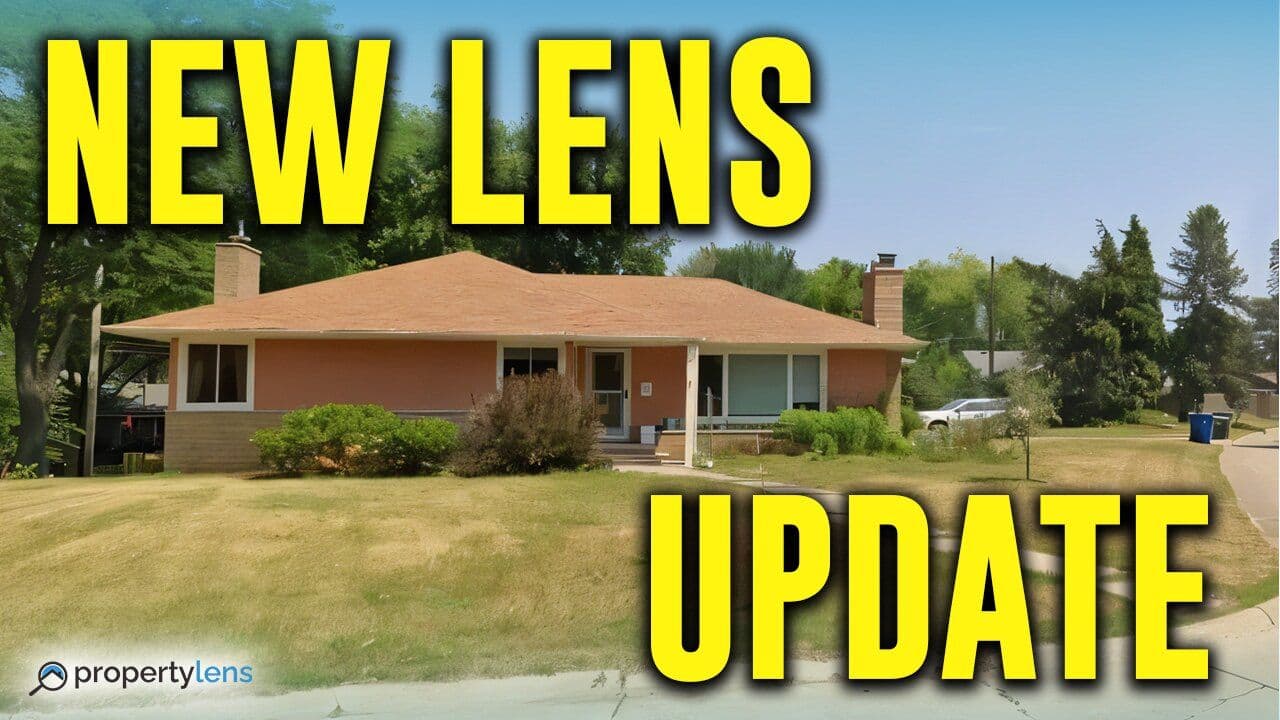
Welcome back to PropertyLens! 🎙️ In this episode, Bob Frady and John Siegman unveil a brand-new upgrade. The PropertyLens Summary Report, a faster, clearer way to review property risk insights without drowning in data. See it in action as they break down a listing at 6617 Warren Avenue in Edina (Minneapolis), MN.
Key Takeaways
📊 In this episode:
✅ Why too much data isn’t the problem, unclear context is
✅ How the new summary highlights red and green flags in plain English
✅ What to ask about roof age, radon, and square footage discrepancies
💡 Whether you’re a first-time buyer, seasoned agent, or investor, this episode shows how PropertyLens empowers you to walk into a showing informed, not overwhelmed.
🔍 New Features & Insights:
✔️ Introduction of the new “Too Long, Didn’t Read” (TLDR) Summary Report
✔️ Side-by-side view of listing data, red flags (square footage mismatch, radon, hail) & green lights (remodeled home, low crime, modern roof)
✔️ Detailed breakdown of replacement costs, insurance expectations, and open permits
✔️ Bob and John’s “3 concerns” framework for evaluating any property
✔️ Real-world example walkthrough of 6617 Warren Ave — complete with timelines, permit history, and storm event history
Resources
🔹 Try it: Propertylens.com
🔹 Questions Contact us: support@propertylens.com
Transcript
[00:00:00] Bob Frady:
Ladies and gentlemen, boys and girls, ships at sea. It's time for another episode of Property of the Week with Property Lands. If you don't know. I am Bob Frady, co-founder and CEO of Property Lens with me as always,
[00:00:22] John Siegman:
John Siegman, president and co-founder of Property Lens.
[00:00:25] Bob Frady:
So John, we have a very exciting announcement to make.
[00:00:30] John Siegman:
We do.
[00:00:30] Bob Frady:
Or to show people one of the criticisms that we get on our property owners report is that it's too comprehensive. There's a lot of data in there and I'm not sure how to handle it.
[00:00:49] John Siegman:
Are you telling me that people are complaining because we're giving them too much data?
[00:00:53] Bob Frady:
Yep. It's 50 pages if you print the report out and they get a little tired.
[00:01:01]
So, and that, it's understandable. We look at this stuff every single day. There might be seeing it for the first time and don't necessarily know how to judge the good from the bad. So we decided to put our great minds at work, not John and I, but the rest of the team in figuring out a way to show the highlights and the lowlights of a property.
[00:01:23]
And so we're gonna show you for the very first time ever visible in public what it looks like. So, John, you're ready to do this?
[00:01:31] John Siegman:
I am. Can't wait to see what it looks like.
[00:01:35] Bob Frady:
Okay. So this is our portal where you can see all the reports that you've ordered in the past. This is the most recent one we've run.
[00:01:42]
6617 Warren Avenue in Minneapolis, Minnesota.
[00:01:47] John Siegman:
And why'd you run that address?
[00:01:49] Bob Frady:
Because it's gonna be on open house this weekend. I figure well. If I'm gonna go into an open house, I wanna know what I'm looking at.
[00:01:55] John Siegman:
Did you see what was in the front yard of that house?
[00:01:59] Bob Frady:
I did not. What was in the front yard of that house?
[00:02:01] John Siegman:
A hydrant.
[00:02:02] Bob Frady:
You know what, there is a hydrant right there. I didn't pick that on purpose.
[00:02:06] John Siegman:
How could you miss that?
[00:02:07] Bob Frady:
But you know what? That's, that's just how much we love hydrants here. So the first thing that we show you in our new summary report is the same. This is a bit different, and this is very different.
[00:02:17]
We give you the basics of the house, when it was built, how many square feet, lots I, same stuff you would see. On one of the realty sites and then we will give you the actual real estate listing so you can see exactly what they're saying on the real estate sites as well. Now. Great. Hey listen, I can get that on a real estate site.
[00:02:37]
What can't can I get on a real estate site? Here's where we start to come into the green lights and the potential red lights for this property. So on the green light side, John, what are we seeing?
[00:02:47] John Siegman:
Well, it's in a nice low crime area. It's a remodeled home, so it's probably been upgraded. It's, got reduced disaster risks.
[00:02:56]
So it's not going to be, a place that's gonna get blown away tomorrow. Modern roof, which is good. roofs are always important. It's got its own private pool.
[00:03:08] Bob Frady:
That's pretty cool. That's lovely about this house. Now, on the con side, what are we seeing?
[00:03:14] John Siegman:
Well, square footage, discrepancy. Not too surprising.
[00:03:18]
Anytime a home has been remodeled or as old as this house is, stuff happens. Sometimes it gets caught in the permits, sometimes it does not. The county assessor may or may not be concerned about having an accurate square footage. Depends upon how they do taxes. MLS is gonna give you every square into that property, so you can pretty much bet that that's a fairly accurate measure.
[00:03:44]
And if they're different, we want you to know because it means something changed along the way and you ought to ask about it.
[00:03:50] Bob Frady:
There are two scenarios where this can come and bite you in the butt if you're not careful. The first is that if it was expanded without permitted work, sometimes the city will make you rip that out.
[00:04:06]
In order to sell the property, a nightmare scenario that yours truly has lived through. Now, this is not Orange County, California where this happened to me, but because an improvement wasn't permitted. Had to rip it out before I could sell the house. It's a question you want to ask right up front. Is the town cool with this and are there any issues with the town?
[00:04:28]
The second is with insurance. Now, this is a relatively well priced home, so we don't have a huge difference between the market value and the insured value, but a lot of times insurance companies will use. The assessor square footage and not the MLS square footage. So they think it's smaller than it actually is.
[00:04:49]
And so when you go to get stuff replaced, they think the house is smaller. It's not as big as you think it is. They think it's smaller, and what they say goes, you may end up in the event something happens to the house with unexpected expenses to fix that. What else we got?
[00:05:07] John Siegman:
It's the Midwest. You got high winds, you got some hail.
[00:05:12]
You're not gonna be taking the bus anywhere from there. And in a lot of places there is PFA contamination risks, so you'd wanna definitely have the water tested as part of your overall home inspection.
[00:05:26] Bob Frady:
So, oh, what I'm thinking is. It was pretty good. Then we get into location features, what are some of the nice things about this location?
[00:05:35]
Brookview Heights is a nice neighborhood. It's near top rated public schools. It's got low crime rates. It's got parks and medical facilities nearby. It's got fire stations nearby with short response times, which is great from an insurance standpoint.
[00:05:48] John Siegman:
And it's in Edina and Bob Brady's in Edina. What more could you ask for?
[00:05:52] Bob Frady:
You know what, it's the Edina. Every day. I need a nice place to live. This looks like a nice place. This is a finished lower level, so you've got bonus rooms, spaces, and that might cause the issue with the square footage because sometimes the town doesn't consider the finished basement S square footage, or they don't know it's finished roofs and windows of ever recent upgrades.
[00:06:13]
Reducing your replacement costs, which is great. So when we look at, well, how much you think you're gonna have to spend on repairs for the next couple of years, it's about 1700 bucks. It's not bad really.. And your insurance premium is also about $200 a month, so about $2,400.
[00:06:32]
Now that's an estimate based upon what's been filed in the areas. Of course, you still want to get. An actual policy to, to get the final number, but this should give you a ballpark on what insurance should cost, and then we give you the key questions to ask before making an offer. You know what's interesting is that they've had multiple roof projects on this house.
[00:06:52]
Is that because the weather keeps bad and they need to change it? Or is it something with the design of the roof? So you wanna ask that question. does the finished basement have moisture and vapor barriers, to make sure that you're not gonna freeze in the winter time. So just ask about freezing in the winter time.
[00:07:11]
Does the house cool? Okay. when you walk in, does it feel temperate? especially if it's in July when it's 95 degrees outside, are the, cooling unit sized properly? And then there's an open building permit in 2022.
[00:07:26] John Siegman:
You definitely wanna ask about Radon. It's big word, Edina and radon, they go together, PFAs in the groundwater. [00:07:35] So is it on a, is it on a pump? Not likely. It's probably on city septic, so, probably not an issue there. Ice dams and roof snow load. So is it just built right? it gets back to the roof issues. So, if it's an ice dam thing, I could see lots of repairs coming with that. Because if they don't insulate properly, it's just gonna happen over and over and over again.
[00:08:03] Bob Frady:
And what are our favorite tools to guard against ice dams? John Siegman.
[00:08:07] John Siegman:
Bob Brady's favorite special gutter guards.
[00:08:10] Bob Frady:
Gutter guards, get them gutter guards. It's, they're cheap to install. You don't think about it, but it's definitely worth thinking about. Okay, so that's it. That's our summary report. You can print this summary out and take it with you.
[00:08:23]
It's a couple of pages to remind you of what to look for and what to ask for, what to verify when you go at the site. But overall, this house looks pretty good. Relatively limited things that have popped up now when you get there. your mileage may differ, but at least going into the date, you have a pretty good idea that this place is legit.
[00:08:43]
Then we go into the deep stuff. So the first part's, the summary, the tilda, as we call it, the Too long didn't read, but if you want to know more and you want to get a deeper assessment into what some of the issues are, then you can look at the property lens insights. So in our BuyerLens, we'll look at two year expected repair expenses, and we don't know how old the water heater is or the HVAC, whether there's termite issues or the electrical.
[00:09:12]
It's not reported, but it looks like it's relatively low for those risks. The pipes were fixed 10 years ago. Plumbing was fixed 10 years ago. Driveway and asphalt. All looks like it was updated about 10 years ago, so you shouldn't have any expenditure on there. You still wanna verify this, but it looks pretty good.
[00:09:29]
Now, what do we see for key findings,
[00:09:30] John Siegman:
PFAs and radon. So there is some toxic exposure. Radon is the one to truly be concerned about, and you'd wanna make sure that there's a mitigation system that steps have been taken, and so you gotta get it measured. And if there is a mitigation system, when was the last time that system was tested?
[00:09:48]
It's supposed to be every two years. So you wanna get that taken care of.
[00:09:53] Bob Frady:
Otherwise we get a bunch of one yellow. Which is, it's an older house. We've got some differences between the square footage, between the assessor and the MLS. The sewer line may have been updated 10 years ago, which is great.
[00:10:06]
Check when the water heater was last replaced. Check when the furnace was last replaced. Just ask these questions going in so you know, you're not gonna have to fix them. But otherwise, we got nothing but greens. Nothing but greens. This is unusual that we see so many greens on a property. Now people say.
[00:10:22]
Then what did I pay for your report for if it's all green? I'm like, it's called peace of mind. Buying a house is stressful. This report to me, gives me the peace of mind to walk in and go, okay, do I like the house? Do I like the location? Do I feel comfortable in here? But I know somebody's sort of gone through this to say.
[00:10:44]
Hey, I don't see any, don't see any, red, not too many red flags here. And still get the inspection, of course, but walk in with comfort. So then we get the insurance lens. Here's the range of the premium between $1,600 and $4,000. $2,300 is the range. Now, Minnesota has been having enormous increases in premium over the last five years because of hailstorms in this area.
[00:11:09]
And a lovely tornado that ripped through, the other night, doesn't help things. And when we look at the risk factors. we found a lot of different things that can potentially impact the cost for insurance. Minnesota's not necessarily a hard market, but it is not necessarily a cheap market either.
[00:11:32]
Then we start to look at the property. Now this is for the people who really want to know what they're getting themselves into. Here's the latitude and longitude. There's the deep dives. For those of you who love the deep dive, believe me, the deep dives here. when you say, I want to go in and know everything about a property, we're telling you all sorts of stuff.
[00:11:52]
Primarily it's siding. It has a basement, it's a ranch. it's average to standard quality. it's got a rectangular shape. It's not on the water. it's more than a hundred miles from the coast. It's Minnesota. There's no special view, no sports features for playgrounds, and it's not sloped. Most recent deal, $599,000 and just went on the market.
[00:12:14]
The assessed value is almost that much, and the market value is slightly more than the list price. So this house is priced to move, not as high as some of the estimates that we have. Not as low as some of the estimates. It's right sort of in the middle, last sold in 2015. Yeah. So it's not a flip. Yep. So it's not a flip.
[00:12:37]
The house has been lived in for 10 years, so there's probably pretty good indication that this is not something that somebody just bought and turned over and is trying to sell real quick.
[00:12:46] John Siegman:
Interestingly, a lot of the permits were from 10 years ago.
[00:12:50] Bob Frady:
Yeah.
[00:12:50] John Siegman:
So it looks like, so person moved in, did a boatload of work on it.
[00:12:55]
Yep. And enjoyed it for 10 years.
[00:12:57] Bob Frady:
Yep. And then you get to the point where it's like, all right, now we wanna do life. Life changes. one thing that you notice here is that in 2020, the taxes were $5,400 a year. In 2025, the taxes were $6,500 a year. That's a 20% increase over six years, an average of about 3% per year.
[00:13:19]
So if you're really struggling to make the payment on this house, understand two things. Number one, the cost for your taxes. Almost never goes down. It almost always goes up year to year. And number two, your insurance costs almost never go down. They almost always go up year to year. So you can count on an extra five to 6% that you're gonna need to budget for because of increases in tax rates and increases in insurance rates.
[00:13:48]
And in future versions of this report, we'll actually spell that out for you. Like, here's how much it's gone up over the last X number of years. Damaging. Oh, there's a lot of damaging events in here. It's Minnesota. Got hail, hail, hail, hail, hail, hail, hail, hail. Lots and lots of hail and some wind.
[00:14:06]
The last big wind event to this location was August 26th, 2024. So it was a little while ago. and it's pretty good size hail too. And one of these roof changes may have been because of the hail. Just stuff that you want to ask about. we've got images of the property. So if we go back, we can see what it looked like in 2023.
[00:14:29] John Siegman:
That's a lot of images of the property.
[00:14:30] Bob Frady:
Yep. They got tons of images of the property. if we go back to the oldest one,, 2019, images weren't as good, but we still have 'em. So it looks like very similar roof. The roof is, replaced in 2015. It has a shingle material. The average roof span, average lifespan of a roof for shingle roofs in Minnesota is 30 years.
[00:15:00]
So there's about 20 years left on the roof. to replace this, it's probably about $25,000. People do not pay enough attention to the roof when they buy the house. It's like, don't wait until the end. Don't wait until the inspection to figure out you got a problem with the roof. If the roof is problematic, you wanna raise it up early in the process, not later.
[00:15:27]
Roof's a good condition. It's got a relatively low exposure. No ponding all that good. This is really roof nerd stuff. no solar on there. A lot of roof fence. We give you soil composition. We don't have it for this area of Hennepin County, but we'll give you, what the roof is made of, what the house is made of.
[00:15:48]
Here's the exterior interior. Again, more nerd stuff. potential threats to struggle, structural integrity. There is a little bit of a water hardness problem here. And John, what's the, why is that a big deal?
[00:16:01] John Siegman:
Well, water hardness will contribute to indoor water leaks, pinhole leaks and pipes, things along that line.
[00:16:08]
C is not that bad of a grade for water hardness. if this were a D or an F, it would definitely be a much more concern. But, if you're moving in, putting on a water softener is definitely going to extend your fixtures and your pipes and everything else.
[00:16:24] Bob Frady:
And just to be clear, here, in Edina, we do have a water softener because the water hardness, spots up all the glasses and makes it nasty.
[00:16:35]
Not a lot of risk of termites. You're not near a mine, which is good to know. In some states, there's mines that run all under the ground. You wanna know if you're proximal to them. And the soil, we don't have data on. Here's the permits. one of the things about per, there's three things about permits that I like to point out to people.
[00:16:54]
The first is, what are the requirements? And so we tell you what the requirements are. Generally in Edina, Minnesota, you can go get a link to the permits, but the second and most important is a lot of times when you buy a house and work is done in that house, you have no idea who did the work. It's not like the owner hands over receipts to say, Hey, here's the company that we worked with and they were great.
[00:17:16]
So this is a way to figure out who did the work. So if there's something wrong or if you liked the work, you can call 'em up and say, Hey, you want to come and fix this, or you want to come and help me with something else that I want to do. So this location, they had some gas, piping was the most recent one, but center point, which is a utility here, legacy restoration, did A building improvement permit. Now, sometimes they're very specific and sometimes they're not. For example, in 2015, there's a tear off on reroof for this location. Now the roof is 10 years old. And what does that mean from insurance standpoint, John Siegman?
[00:17:58] John Siegman:
Well, it means you might, at the end of your rainbow, insurers do not like old ropes.
[00:18:06]
Mostly because they don't like to pay for somebody else's damage, essentially. So, when you get to 10 years, there are some states that at that point you go from a replacement cost issue to basically a deprecated cost, and you end up absorbing more and more of deductible on beyond the deductible and into the cost of the roof.
[00:18:35] Bob Frady:
Yep. Yep. You go from, as they call it, in the insurance world, you go from replacement cost to actual cash value. What is the value of your roof? And lemme tell you something, the value of a 10-year-old roof is not that much. It's made in the hundreds of dollars versus the thousands of dollars that cost to replace it.
[00:18:53]
So just something to be.
[00:18:54] John Siegman:
And it's a matter of fact.
[00:18:55] Bob Frady:
Just some, yeah, just something to be aware of. If you're gonna have to reroof this, you might end up paying a lot more than the insurance company coming in and automatically replacing it. Check your policy to be sure if they have replacement value. Make sure there's not an exclusion for the age of the roof.
[00:19:14]
More and more permits. There was another reroof in 2004, and here's the other thing. This place was sold in 2015. Anything that happened before that, you're never gonna have the chance to talk to those sellers because they're gone. I mean, you barely get to ch talk to the current sellers. You talk to their agent.
[00:19:33]
So what happened before the current buyers? You had no clue. Now you have a clue. So you can see that this wasn't just reroofed in 2015, it was Reroofed in 2004 as well. So it's not unusual for this to be reroofed, and it was also Reroofed in 2001. So it looks like about, every 12 to 14 years, this, that roof's coming off.
[00:20:01]
And that's why insurance rates are higher in Minnesota than they are in non hail states. All right, next up, John.
[00:20:12] John Siegman:
We're looking at flood. This is a perfect property. until the next arc gets built, this property probably will stay dry.
[00:20:20] Bob Frady:
Now some people would prevaricate and say every house is in a flood zone.
[00:20:24]
Bob and John, you should know that.
[00:20:27] John Siegman:
Yeah. Every house is subject to flood. Yeah. No, yeah.
[00:20:32] Bob Frady:
Some are just much, much, much, much, much less subject to it than others. it's not in a hundred year or five year flood zone. there's no incidence of coastal riverine flooding here, so we don't recommend that you get flood insurance.
[00:20:46]
You, you always are welcome to get it, but you don't have to. It's not required. for this location, if you wanna see the map, you can't because there is no map, because there's no flood zones near here. You're not close to a flood zone, which is great. You don't have to worry about it. the nearest one is about 700 feet away.
[00:21:05] John Siegman:
Yeah. And probably way downhill.
[00:21:09] Bob Frady:
Yep. No LOMR and LOMAs. If there was one, we would report it. And then we look at the climate risk for this area, and it's kind of what you would expect. It's winter weather, it's cold, and then hail, tornado, as we were discussing this week, the tariff war between Canada and the US is very similar to the weather war between Canada and US.
[00:21:34]
That takes place over Minnesota every summer where the hot air. From Washington collides with the cold air from Canada, the cold, realistic air from Canada causing all sorts of problems in the upper Midwest. And that's our political statement of the day. Not much else. This is great. This is a great location.
[00:21:55] John Siegman:Pretty clean.
[00:21:55] Bob Frady:
Yep. Pretty clean. You got some low crime there. Pretty safe. You don't have any sex offenders. That is, there may be some unregistered ones, but as far as we know, there's no registered sex offenders. You're not gonna, there's not a lot of bus lines around here.
[00:22:12]
If you need public transportation, this is probably not the place that you're gonna pick. And it's not that walkable. Like you, every place is walkable. It's just a question of how much effort that you wanna expend. but this place, given everything else, is not that walkable. you are near an airport, so you will hear a little bit of airport noise here.
[00:22:34]
MSP landing zone goes right over this area. sometimes, and this is the average over 24 hours, so you might have an occasional rail line that you hear, but it's not persistent. So relatively no lo low noise, which is great. Points of interest all around here. Our childcare centers, ev charging stations, public schools, charter schools, colleagues and university, all sorts of fun stuff.
[00:23:03]
You look at your, your toxins exposure, your pollution factors, you just get your water checked is really what it comes down to. Now you also wanna be on the lookout. Yeah. You also wanna be on the lookout for mold. Any obvious signs of mold, of course in the bathroom, if there's any weird, crinkling or water in the walls or in the ceiling, then you definitely want to get a mold test run if you see any visible sites of mold, because this area, because of its humidity, does have mold formation, does support mold formation.
[00:23:38]
The nearest contaminated sites are all down the road a piece. There's an underground storage tank about a half mile away. But everything is about half.
[00:23:46] John Siegman:
That would be a gas station.
[00:23:47] Bob Frady:
Yeah.
[00:23:48]
HP: Yeah. It's about half mile away, so it's nothing too bad. Nearest Superfund site is almost two miles away, which is the Edina Well field.
[00:23:57]
And then here's the closest known sites. Nearest Brownfield is he done a public works garage and that really, unless it's right next to your property, it's not all that much for you to be concerned about. Good fire protection, good medical, pretty good Law of enforcement response station's a little far away.
[00:24:21]
Then you can see where all the locations are.
[00:24:26]
Utility costs. We expect that the utility costs on this property will be about $103 a month. you can verify this with the seller, but that's what this sized house at the normal kilowatt hour usage for this size house would generate. Now, if you've got a house full of kids and everything's on all the time, your mileage as John loves to say, your mileage may vary, but that's about what you should expect to spend in a month.
[00:24:53]
if you want to get solar, it's 10 years with federal incentives, it's 15 years without it. some people like it, some people don't. but that's what it would cost. Here's what your utility's putting out in terms of energy burning a lot of coal here in the upper Midwest. Still about 20% of our, power does come from coal.
[00:25:16]
Here's a deep dive on insurability. And then if you want to get a quote. You can get a quote from one of our partners. And then finally, the property timeline, which all sorts of pictures and the permits and everything all lay out in a timeline format. So if you were gonna buy 6617 Warren Avenue in Minneapolis, Minnesota, or Edina, Minnesota.
[00:25:48]
Thank you, Google. What are the three major things that you'd be looking out for?
[00:25:54] John Siegman:
The three concerns that I would have in looking at this house besides, being in close proximity to you would be radon. Let's make sure it's got a system. Let's make sure that system works. Let's make sure all of that good stuff.
[00:26:14]
The second would be the discrepancy between the square footage. Doesn't matter. Was it permitted? is the county just lazy in updating that? Who knows, right? But let's attempt to figure it out. And then the third concern I would have is we've got a 10-year-old roof on this house. What's the insurance implication?
[00:26:40]
While a shingle roof should last 30 years, clearly given three roofs over the last 20 some odd years, they don't. So, every eight years you can expect to replace it. So we might be a little bit past its expiration date. It's coming due even though structurally it probably isn't due, but the weather is gonna take care of that.
[00:27:12]
So those would be my, three concerns I would wanna find out on the roof if the last time that they re-roofed it, they used a fortified shingle for code, to make sure that it would give, as much life as it possibly can. Those would be my concerns.
[00:27:32] Bob Frady:
Okay. If I were looking at 6617 Warren Avenue in Minneapolis, Minnesota, the first thing I would say is, this house looks great.
[00:27:42]
The initial scrub is. It looks pretty good. I feel pretty good about going in here. There are three things that I would take a look at. Number one, of course, is the roof. do they have any sort of reinforced roofing that they put on the last time to help protect against weather?
[00:27:59]
Because now it's been three times and 20 years that the roof has been replaced. 23 years I think is the number. So that's number one. Number two is I get the water tested. It's not part of the standard inspection. Standard inspection turns the water on to make sure their runs, they don't test the water.
[00:28:16]
So I would get a water test at this location to make sure that the water quality is good. The local municipality is supposed to try to check for keeping PFAs out of the water. but you still don't wanna. Take that risk on your own, just get it checked. and then the third of course is radon.
[00:28:37]
Is there a mitigation system in the house? If there is, when is the last time that it's been tested? But overall, I feel pretty good about this location. In fact, I may go buy the open house this weekend and see what it looks like. But, take the property witness report with you. Yeah, take the property report with me and say, so anyway, I think it looks great.
[00:29:00]
And there's always questions about whether you like the house or not, but you don't have to worry about booby traps hiding in here because we've done a lot of work to prep you, for your meeting when you go into the house. So, anything to add there? John Sigman?
[00:29:15] John Siegman:
No, I think if you wanna be Bob Frady's neighbor, this house is for you.
[00:29:19]
Bob Frady: Neighborhood. Neighborhood. I just, I don't even know where this is. I don't know where anything is around here, but that's just me. All right, so for this week's episode of Property of the Week, I'm Bob Frady.
[00:29:30] John Siegman:
I'm John Siegman.
[00:29:32] Bob Frady:
Until next time. Oh yeah, subscribe makes us feel better. Does helps our egos. All right.
[00:29:40]
Take care.


