Listen or watch on YouTube
In This Episode
Hosts: Bob Frady & John Siegman
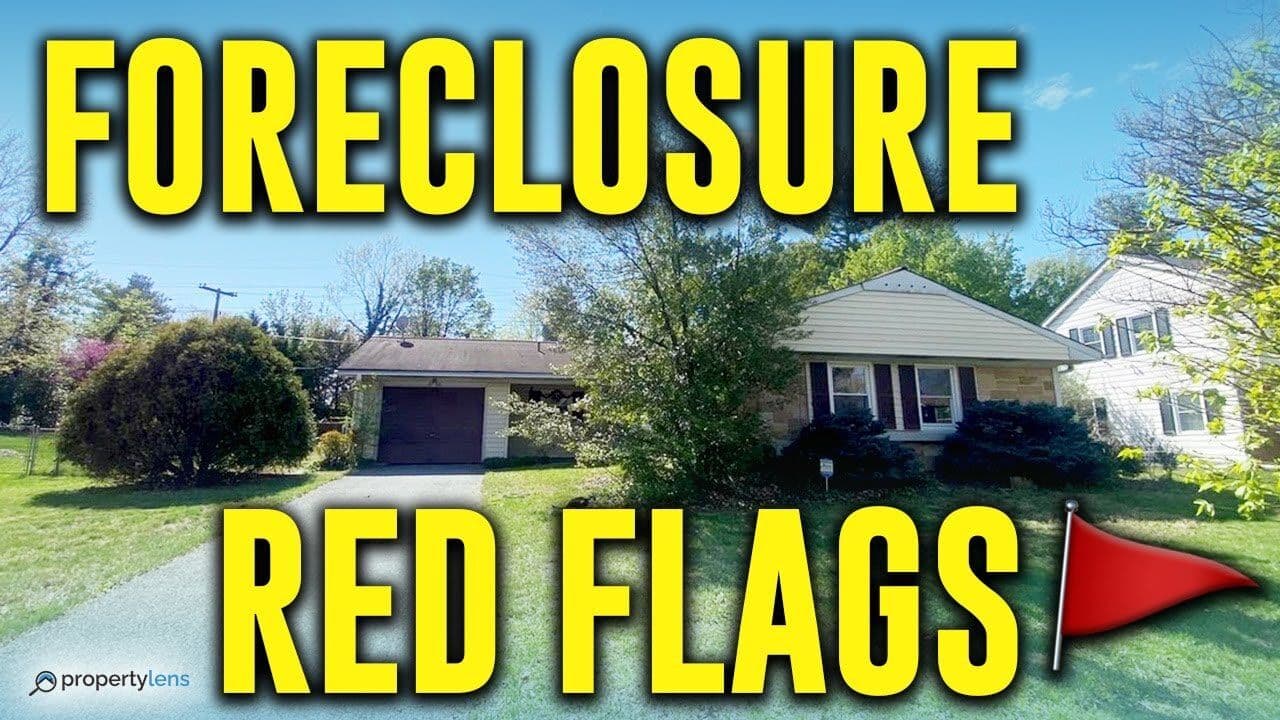
Properties: 4006 Wharton Turn, Bowie, MD 20715
Episode Summary
This week on PropertyLens, Bob Frady and John Siegman head to Bowie, Maryland (John’s old stomping grounds) to break down a real foreclosure listing at 4006 Wharton Turn. From hidden mold risk to surprising roof resilience, this episode dives deep into what to watch for when buying an "as-is" home.
Key Takeaways
📊 In this episode:
✅ Why foreclosures require a different inspection mindset
✅ The real cost of roof wear after repeated hailstorms
✅ What PFAS, mold, and outdated permits mean for buyers
💡 Whether you're considering a distressed property or just want to avoid unpleasant surprises, this episode delivers a blueprint for smart, data-driven due diligence.
🔍 What do we see
✔️ Real-time walkthrough of a PropertyLens report on a HUD foreclosure
✔️ Roof, HVAC, and water heater in decent shape, but plan for $20K+ in repairs
✔️ Size discrepancy may affect taxes and insurance
✔️ PFAS contamination and mold exposure risks in Maryland’s humid climate
✔️ Property taxes and insurance have crept up over time, contributing to foreclosure
Resources
🔹 Try it: Propertylens.com
🔹 Questions Contact us: support@propertylens.com
Transcript
[00:00:00] Bob Frady:
Ladies and gentlemen, boys and girls, ships at Sea. It's time for another episode of Property of the Week from PropertyLens. For those of you who don't know. Maybe you're here for the first time. Maybe some really great friends sent you this podcast. I'm Bob Frady, co-founder and CEO of PropertyLens. And with me as always, is
[00:00:29] John Siegman:
John Siegman, president and co-founder at PropertyLens.
[00:00:33] Bob Frady:
So John, today we are going to go to the wiles of Maryland. Now, for those of you who don't know, John used to live. Maryland and is a graduate of the University of Maryland. So it was lovely when Cornell beat Maryland in the lacrosse finals this year. It was lovely.
[00:00:56] John Siegman:
Yes, it was lovely.
[00:00:58]
Like a little get from me to you.
[00:01:00] Bob Frady:
Okay. So we're gonna go to Bowie Maryland today.
[00:01:05] John Siegman:
Beautiful. Bowie, Maryland.
[00:01:07] Bob Frady:
And now before we get there. We go to our trustee realtor.com site, and who appears on the site? Reba McEntire.
[00:01:16] John Siegman:
A realtor? No.
[00:01:17] Bob Frady:
No. Somebody who can give you value for your property. No. Reba McEntire. I'm like, what in the holy branding are you doing there, realtor?
[00:01:25]
It's like, rather than differentiate yourself and give something cool to people, you bring in Reba. I mean, fine. It's a well worn marketing trope, but it's like. Come on. Are you just saying that you're a commodity and you just need a brand, to set it apart and using Reba? I mean, God bless you, but come on people.
[00:01:47]
So anyway,
[00:01:49] John Siegman:
Are you saying they can do better than that?
[00:01:51] Bob Frady:
I think they could do better than that. No disrespect to Reba McEntire. She's wonderful country artist and television personality. But if I'm buying a house, I don't care what Reba has to say about it. I wanna know what's going on in the house. That's the kinda stuff I wanna know, but then, maybe I'm just not like other people.
[00:02:10]
Okay. Okay. So we go to Bowie, Maryland. Is it Bowie or Bowie? Bowie. Because I see David Bowie right there, not David Bowie.
[00:02:17] John Siegman:
Yeah, well think about the Alamo.
[00:02:20] Bob Frady:
Okay. And then we go to pick out a house in Bowie, Maryland. We picked out this house, 4006 Wharton Turn in Bowie, Maryland. 20715. And what is interesting about this house, John?
[00:02:34] John Siegman:
Well, first of all, it's in the W section. Bowie is actually broken out into named sections. So streets make neighborhoods. So I used to live in the Somerset section where all the streets were made named with Ss. So this is in the W section, so you can tell it's slightly older or slightly newer as they sort of went through the alphabet, as they were rolling out parts of the a master plan community in the early sixties.
[00:03:04]
The other thing that's unique about this piece of property is it's a foreclosure.
[00:03:09] Bob Frady:
Ding, ding, ding, ding, ding, ding, ding, ding, ding. It's in foreclosure. And then when we go to the real estate listing and look what it says. A bid has been accepted. HUD homes are sold as is. So the question is, what do you walk it into?
[00:03:24]
Whenever you buy an As is house, that means you can get an inspection, but they're not gonna give any money back for it if things are wrong. So you need to know stuff upfront and that's where we can run PropertyLens. And here it is, a 4006 Wharton Turn, Bowie, Maryland Single Family Residential, 1500 square feet.
[00:03:42]
We ran this report today, so if we view the report. What do we see?
[00:03:47] John Siegman:
I don't know. Let's make your screen larger and we'll find out.
[00:03:50] Bob Frady:
Let's see if you can actually see it, ladies and gentlemen. 'cause John can't, what's this? What's this blue thing at the beginning of the report there, John?
[00:03:59] John Siegman:
Well, the blue thing is the snapshot of the property.
[00:04:02]
Here are the 10 probably most important things that you should know. Looking at this property, you can consider it a cliff. Notes showing my age of the entire report. In it, you can see that there have been seven possible damaging events, probably wind and hail, primarily, only two owners in the last 15 years.
[00:04:24]
So it's not a problem house where you'd see, five, 10 owners in the last 15 years. it's got two known building permits. They did something and they actually permitted it. That's always cool. Not in a flood zone. Roof's in good shape. it's not a flipped property. Doesn't need appear to need major renovations, but you're gonna lock into some standard repair costs on this house because you're about $10,000 a year for the next two years.
[00:04:54]
Huge increase in taxes. And that's only because if this is a foreclosed property, taxes became a problem. So take that with a grain of salt, but you would definitely wanna know what your tax bill is going to be and then down on the insurance increase per year. 7%, pretty much in line with the average for the rest of the country insurance.
[00:05:19]
Has been getting more and more expensive.
[00:05:22] Bob Frady:
No doubt. And what we've seen lately is articles saying things like local taxes plus insurance increases are causing people to go into foreclosure because they can't afford to keep up the payments. you think your mortgage payment stays steady and all of a sudden taxes creep up.
[00:05:39]
Insurance creeps up. You need to know what the scope looks like in that. It's about, 37% over six years, which is not insignificant.
[00:05:48]
John Siegman: You'll notice it.
[00:05:49] Bob Frady:
So what are some of the good things and some of the bad things about this location?
[00:05:52] John Siegman:
Well, you look at the good things. We already talked about it. Low flood risk, good, rough, it's close to parks.
[00:06:00]
There are lots of parks in Bowie. It's fairly energy efficient and it's a convenient location. Some concerns, size, discrepancy, and that's pretty common actually in this area. My dad used to live there. We sold his house. There was a size discrepancy because a lot of people, very early on either put on an addition, or they've converted a garage.
[00:06:27]
And so the square footage doesn't necessarily match what the county assessor has. and it may have been a permitted issue thing, or it just may be because they did it so long ago. Nobody knows if there was a permit or not. It's humid in Maryland. So you've got a high mold crime or high mold index, moderate crime.
[00:06:50]
there have been wind issues there. And, while the Metro bus does run and will take you to Metro Rail, you're sort of far out. So. You're not taking public transit to the grocery store.
[00:07:04] Bob Frady:
All right. Some of the benefits, it's close to Bowie Town Center, but you're not gonna get there on public transportation necessarily, and it's pretty good access to major routes for commuting.
[00:07:16]
You get a big backyard and you get bright living room with lots of natural light. We do think that the insur that the repair costs for this location are about 20 grand over a couple of years and $1,700 annual estimate for insurance costs. So given all this data. What are some of the key questions that you should ask John?
[00:07:38] John Siegman:
Well, in this case, you can't really ask anybody because it's a foreclosure.
[00:07:43] Bob Frady:
Well, you could still ask the listing agent, but agent,
[00:07:45]
John Siegman: You can ask the listing agent. eh, good luck getting a real answer. But if you did the questions you should ask, what are we looking at and why is there a size discrepancy, which we already talked about how old's the AC, and the heater.
[00:08:02]
Those are things that. Maryland, if you get 20 years outta one, you've done well. when was the water heater last inspected, or when was it last replaced? Checking for mold and what types of things might you deal with that? And then, I would look into potentially getting an alarm system, or at least the signs that say you have an alarm system, maybe a couple cameras.
[00:08:29]
Just make it look a little bit more difficult than. You know where it's at.
[00:08:34] Bob Frady:
Then there we are. There's the overview of this property. So given the overview, what we're seeing so far is there's a couple of concerns. Number one, it's a foreclosure. How long has it been vacant? Because it is a mold determined area.
[00:08:50]
How long has that mole sort of been building up? The second is, you don't have the ability to go in and inspect, get an inspection contingency. So how old are the systems? And then, the third thing is the square footage difference. if that square footage adjusts, does your tax rate adjust to meet the new square footage?
[00:09:12]
Sometimes it does, sometimes it doesn't. But those are things that I would want to take a look at. And if you want, you can print this summary. You can take it with you. Just to remind yourself of what to look for when you're walking through this sort of house. Now. That's it for the summary. Now we're onto the details.
[00:09:27]
So if you get to the insights, our BuyerLens shows the expected two year costs. There's no reported changes to electrical, plumbing, driveway, pipes, sewer foundation, or termites. Those are all, not reported, not permitted any work that's been done. So if you have the opportunity to ask about those things, I would, but you may not get an opportunity to ask about those things because it's a foreclosure and it sold.
[00:09:58]
As is good news. HVAC looks like it was updated seven years ago in the water heat. It looks like it was updated seven years ago. So John, anything to add from there?
[00:10:07]
John Siegman: No. I mean, the roofs looks like it's in good shape. Your real big issues, your HVAC, your water heater, your roof all seem to be in decent shape.
[00:10:17]
So if you're gonna roll the day, sign a foreclosure. This might not be a bad one to roll the dice on.
[00:10:22] Bob Frady:
Yep. So some of our key finding is you've got some risks for toxic exposure. Excuse me, I'm all choked up over toxic exposure.
[00:10:32] John Siegman:
Well, as you should be. So here I'll step in. we've got mold, we've already talked about N PFAs, PFAs are pretty much everywhere, and so you wanna definitely take a look at this.
[00:10:46]
A lot of the Bowie water comes from wells and well water is known to have PFA contamination. Yes, it runs through a public process for cleaning and all the rest of that before it's piped to the house, but still something you might wanna get checked.
[00:11:03] Bob Frady:
Get a water test. See that's something that's not in the summary.
[00:11:07]
That's something that you get by looking at the underlying data. What else we got?
[00:11:12] John Siegman:
It's 58 years old. so you wanna deal with a 58-year-old property, there are going to be things you're gonna need to check. It was built before 1978. Most of the houses in Bowie were built with asphalt shingle siding.
[00:11:26]
A lot of them have been covered up and, replaced with aluminum siding. So you might wanna check that. Damaging wind events, you're gonna get some aftermath from a hurricane every now and then. There have been a couple of tornadoes in the area. So some things that you wanna take a look at and then, the rest of it is pretty straightforward.
[00:11:48]
No significant environmental risks, so there's no leaking storage tanks, no EPA Superfund sites, none of that stuff to worry about. And there were some good shape. So you're not rush out and put a new roof on it.
[00:12:02] Bob Frady:
So then when we look at insurance, it's pretty reasonable cost, between $936 and $2,000 a year, depending upon who you pick and the coverage that you get.
[00:12:13]
The estimated cost to replace this property is the exact same amount as the sales price. Yeah. You're looking at, depending upon how much it actually, the offer was actually for, your replacement cost is the sales price, so you wanna make sure that you're fully insured and then some of the risk factors that you have.
[00:12:36]
Yeah, it's pretty close to the replacement cost. So, this is slightly higher, insurance is going up slightly higher in this state, than average. but it's not horrible, it's below market value in terms of the price because it's a foreclosure, it's right around its assessed value.
[00:12:56]
You've got a lot of information that says, okay, you do really need to take a quick, you need to take a look at all this stuff and feel comfortable with the fact that you're gonna end up spending a fairly significant amount of money to get this to a more modern approach or a more modern level.
[00:13:13]
But that might be okay, from a starter house standpoint, this might be a good turn for people. Here's all the data from the listing. it tells you all the different stuff. It might make you great investment, and I wouldn't necessarily disagree with that. All sorts of features in construction, it's in Bowie, the municipality in Prince George's County, part of the Prince George's Public School District.
[00:13:37]
Let's see. It's primarily Frame. It's does not have a basement. It's a ranch. it's, average construction quality and it's rectangular. It's not in the waterfront, 15 miles from the coast. So here's what we see. It's a government buyer back in 2024, enlisted in 2025.
[00:13:56]
John Siegman: So it's a foreclosure, Whether it was for taxes or whatever you may never find that out, and that's why it's showing the. Government is owning it.
[00:14:07] Bob Frady:
So now here's why we see weirdness in the property taxes is because Bowies very weird about reporting their property tax structure. So it looks like the reports only every three years.
[00:14:19]
So if we look at every three years, it's gone from 35. Gets assessed every 3 years. But then you have a, a year where it's like, no, $500 s what's reported by the city. So this is a data issue as much as anything else. But if you look at this the last full year, that. If you go back to 2017, it was $3,700.
[00:14:42]
If you look at 2023, it was $4,600. So prices have gone up about $900 over those years, which is something that you might want to consider. It's not that much,
[00:14:54]
HP: That's 20% rise.
[00:14:56] Bob Frady:
Yeah, it's about 20% rise, so it's not horrible. Here's pictures of the property. It's empty, so it's moving ready?
[00:15:03] John Siegman:
Well, it's, it's empty.
[00:15:05] Bob Frady:
Yes. Damaging events, last one. We had some, a terrible case of the winds in 2025, but the last damaging hail event was in 2023 and another one in 2022, and another one in 2021. So at some point that hail may come home to roost.
[00:15:26] John Siegman:
Yep. You know when it comes your time to surface that roof, it's time for fortified shingles.
[00:15:31] Bob Frady:
Right. And that's more expensive than a regular roof. Again, something that you might end up having to tackle. Let's see if we go back to 2019, it's the same roof.
[00:15:40] John Siegman:
Looks pretty much, yeah. Or the same color anyway. Yep. But the staining and things along those lines looks pretty much in line. So I'd say it's the same rock.
[00:15:51] Bob Frady:
Yep. So we estimate that this roof is about 11 years old. The average shingle roof in Maryland lasts 30 years. This is primarily shingle roof and the replacement cost is probably about $21,000 on this. Don't be surprised if you end up replacing the roof sooner rather than later. It's in good condition now, but when you have three events in two years, that can wear a roof out fairly quickly, but so far looks pretty good, right on the cusp of okay.
[00:16:24]
If it was a little bit lower, if below a three would be, or three or below would be a c and not such a great. Roof. but this is right on the cusp of acceptable. Got some staining, got some algae standing on there, which doesn't help.
[00:16:40] John Siegman:
Well, it's humid, it's gonna happen.
[00:16:42] Bob Frady:
So, here we've got the construction type, we've got the exterior.
[00:16:46]
There's a lot, there's nothing here that's sticking out that's crazy, which is great. Structural integrity, you've got some moderate risk of termite infestations. It's something you want to check. did you ever have your house in Maryland, tented John.
[00:17:01] John Siegman:
No. The termites in Maryland and on the east coast basically form a mud tunnel and they come up from the ground and so it's very easy to detect, 'cause they're not swarming as they do here in Southern California.
[00:17:19]
And so termites were never a real problem. And you've got a driveway and walkway and things like that, patio, all around your house. Those are all pretty much definitely impenetrable barriers for termites. So it's something that you definitely have to be concerned about because it doesn't get really cold.
[00:17:43]
You're not gonna tell them all along. But it was never, never an issue. Now, that was a while ago, so maybe it's an issue now. Things don't stay static. So it's just something you need to check for.
[00:18:00] Bob Frady:
Let's see, everything else looks pretty good.
[00:18:02] John Siegman:
Everything else.
[00:18:03] Bob Frady:
Moderate to low risk. The last permits that we have permits are required for most single family work in Bowie.
[00:18:10]
And then if we look at it, did some, put a gas water heater in 2018, and a gas furnace in 2002. [00:18:19] John Siegman: And by our friends at Bel Air Engineering Service Company, they've been there forever. I would say easily half the homes in Bowie that have had work done probably had it done by them.
[00:18:30] Bob Frady:
Well, there you go.
[00:18:31]
So when you, when you buy this house as is, you don't know who did the work. Now you know who did the work. How much time is that gonna save you? I would say at least a little bit. no risk of flood here, or very, excuse me, low risk of supply. [00:18:45] John Siegman: There's always a risk of flood.
[00:18:47] Bob Frady:
Always a risk of flood, always a risk of flood.
[00:18:50] John Siegman:
Not could be. For those of you listening to us who sell flood insurance, cover your ears. You don't need flood insurance for this property. You can not recommend it.
[00:18:59] Bob Frady:
The other thing about this property that's interesting is it's up high. It's not on the down. It's not on a down slope. So you don't have to like, if the street, blew a main, right?
[00:19:11]
So if the water mean blue on the street, the water wouldn't run down to the house. It would take a pretty big flood to reach the house.
[00:19:20] John Siegman:
A pretty significant amount of water to get to the front door.
[00:19:24] Bob Frady:
Yep. There's the map's boring 'cause there's nothing there.
[00:19:28] John Siegman:
That's not a boring map. You're almost seven tenths of a mile per the nearest blood zone, so.
[00:19:35]
It's just not gonna come and get yet.
[00:19:40] Bob Frady:
So, seven tenths away. There's no LOMA and LOMRs, there's no need. climate risk is generally very low in this area. Yep. Which is, which is why the insurance is affordable. So all of the no wildfires in boot. Yep. There's a little bit of, the overall risk in this area is low, but it does have some.
[00:20:02] John Siegman:
Just a little bit of Monkey Mo going on as far as crime. Yeah. Get a camera overall is what I would say. Relatively safe, no sexual offenders within an a half mile, which is always good.
[00:20:15] Bob Frady:
That's great. Quality of life. Public transit is limited in natural disaster. Resilience is limited, so if there's a warning, pay attention to it.
[00:20:26]
But it's good. Walkability got relatively low road noise, and that's average over 24 hours with limited airport, almost no airport and rail noise. Got some schools all around there. So if you wanna send your kids to school in this area. Not too far away. White hole in Rockledge Elementary.
[00:20:46]
This is a Farmers market. Close by.
[00:20:47] John Siegman:
Yes. White hole in W section. Rockledge in the R section.
[00:20:51] Bob Frady:
Ah, there you go. Is that how it works?
[00:20:53] John Siegman:
Continuing the theme? Yes. It's actually how it works.
[00:20:56] Bob Frady:
Oh crazy. [00:20:57] John Siegman: Somerset Elementary,
[00:20:59] Bob Frady:
Crazy. and you get a flower and you get a farmer's market not too far away. Let's see, from a pollution standpoint, you get mold and pfas right on a little bit.
[00:21:08]
it's average though. Initially.
[00:21:09] John Siegman:
You wanna get our basements?
[00:21:11] Bob Frady:
Yeah, you may wanna get it tested, but if you're paranoid, but no. The near nearest contaminated site, there's an underground storage tank in a mobile location about a third of a mile away. Everything else is pretty far away. Health and safety.
[00:21:26]
Pretty good. Fire response, pretty good Medical response. Law enforcement response is, okay. health and safety. So you've got your volunteer fire station is 1.3 miles away. And there's another one, 1.7 miles away. Now they're a volunteer, so they're not as good as fully staffed because you gotta go get there.
[00:21:47]
But, at least it's close by.
[00:21:49] John Siegman:
They're just as well trained, and the equipment is just as good. They're just not there all the time to instantly respond.
[00:21:56] Bob Frady:
Correct. Estimated utility costs for this location. Probably gonna be somewhere on the average of about $120 a month. Your particular mileage may vary.
[00:22:10]
If you like the heat on a lot kind of a thing. Baltimore Gas, electric heat, or the. Or the ac. Some people like to crank it up to refrigerator level and some people don't. If you want solar, the payback period is 10 years, seven years with federal incentives as long as they last. That's personal choice, but you can get a very limited size system that would cover this house.
[00:22:33]
If you wanna get sold, you can refer out to it from our link. The carbon footprint for your utility, they use a lot of nuclear. This area, along with natural gas, hydroelectric, a little bit of wind and some solar and curability looks pretty good. Replacement cost, just be cautious of this. The replacement cost is the sale price, so you wanna make sure you're covered on your Schedule A, and if you want to get a quote, you can click on one of our friends, and then finally you get the timeline.
[00:23:05]
And so, John, Let's say one of your kids was looking at. This location. \What do you think?
[00:23:15] John Siegman:
I think it's, a pretty solid location. I mean, we don't know why it went into foreclosure. Yep. And, but the pictures inside looked pretty decent. There weren't gaping holes in the walls, things along those lines.
[00:23:32]
So, I would say, okay, we've got, probably a sewer line, would be my first concern. And just given the age of the property, we don't know. When or if it was ever replaced and there wasn't any big trees in the front yard. So that's always a plus, but I would definitely have that. Scope would be one of the things, first thing that we would do.
[00:23:55]
So on the top three things. Because you can't be concerned about it 'cause you're buying it in foreclosure. So the first thing we would do is scoop out the sewer line. Second thing we would do is, if it doesn't have gutters, get gutters on the house and then put gutter guards on those gutters if they're there or if they're not, put 'em on.
[00:24:16]
Once we put the gutters on, just to take care of things that. freaky stuff. Like, if it gets cold enough, long enough, warm enough, you might get an ice dam. It's not a place that you're gonna typically find them, but there is a lot of moisture. Lots of things can happen. And then, the third thing I would probably be looking at is just, a check of the electrical system, the panel, the type of wiring in the household.
[00:24:45]
Make sure that it's, given the age of the property. I would check for maybe some aluminum wiring, which is not good stuff, but like copper. But overall, it looks like with the good roof, it'll keep the rain off and it's got a relatively newer furnace and newer water heater, so you're not gonna have to worry too much about those things right off the bat.
[00:25:10]
It's not a bad property, it's not what I would normally think of as a foreclosed property.
[00:25:16] Bob Frady:
Yep. Lot of people think sometimes foreclosed properties are, full of anger holes and things like that. But for one reason or another, this was foreclosed and we don't cast judgment on why. We look at it as what if this was our kid, buying this house, what would we say?
[00:25:34]
And given this location at 4006 Wharton Turn in Bowie, Maryland as a foreclosure, you have to buy it as is. So your inspection contingency doesn't count. But the number one thing I would do. Get an inspection because the variance on what you might spend on this could be pretty large. we estimate that it's about $20,000 to $60,000 in five year expenses on this location.
[00:26:04]
So get an inspector to come in, walk through everything, and be prepared to spend probably $20,000+ over the next couple of years on getting stuff fixed. So that's my number one concern. You can't figure that out until after you buy the house, unless of course you know you have an uncle who's an inspector or something like that.
[00:26:26]
So, number one, get it inspected. Number two, check for mold. Look for visible signs of mold throughout the property, because it is a mold area and the property may have been vacant for a while, and that's something that you want to really keep an eye on. And the third is you may end up replacing the roof a little bit sooner than later.
[00:26:48]
It's in okay condition now, but with three hail events in the last three years. If that pattern continues, then it's just a matter of time. This roof may have aged out. In terms of insurance, so they might not replace it. That might give you actual cast value, which means it comes out of your pocket. But I would also say that it looks pretty good.
[00:27:09]
Little elbow grease, little love, little paint, little updating of internal fixtures to make it look a little more modern is a great opportunity for someone to get into a house at a, in pretty good neighborhood and really enjoy home ownership. John, what? Say you.
[00:27:26] John Siegman:
I agree. It's a great place to grow up and it's three bedrooms, two bath.
[00:27:35]
I can't say it's absolutely move-in ready, but it's, not what I would've expected. When somebody says, Hey, the house is in foreclosure.
[00:27:43] Bob Frady:
I would say one thing, if you are going to look at a foreclosed property, absolutely. Go in there with a PropertyLens report in your hand and use that as your guide to go through the house to say, does this really look the way I expect it to?
[00:28:01]
And what am I gonna end up getting myself into because I'm buying it as is. You should still get the inspection, but you don't get that expression contingency. You're buying it as. Walk in with the PropertyLens report in this case, I'd feel pretty good about it. Yep. Alright, well here's, that was a nice trip down memory lane for John and growing up in Bowie, Maryland.
[00:28:26]
And for this week's episode of Property of the Week, I'm Bob Freddy.
[00:28:30] John Siegman:
I'm John Siegman.
[00:28:32] Bob Frady:
Till next time.


